
Valencia's music scene: what to know, from wind bands to bakalao
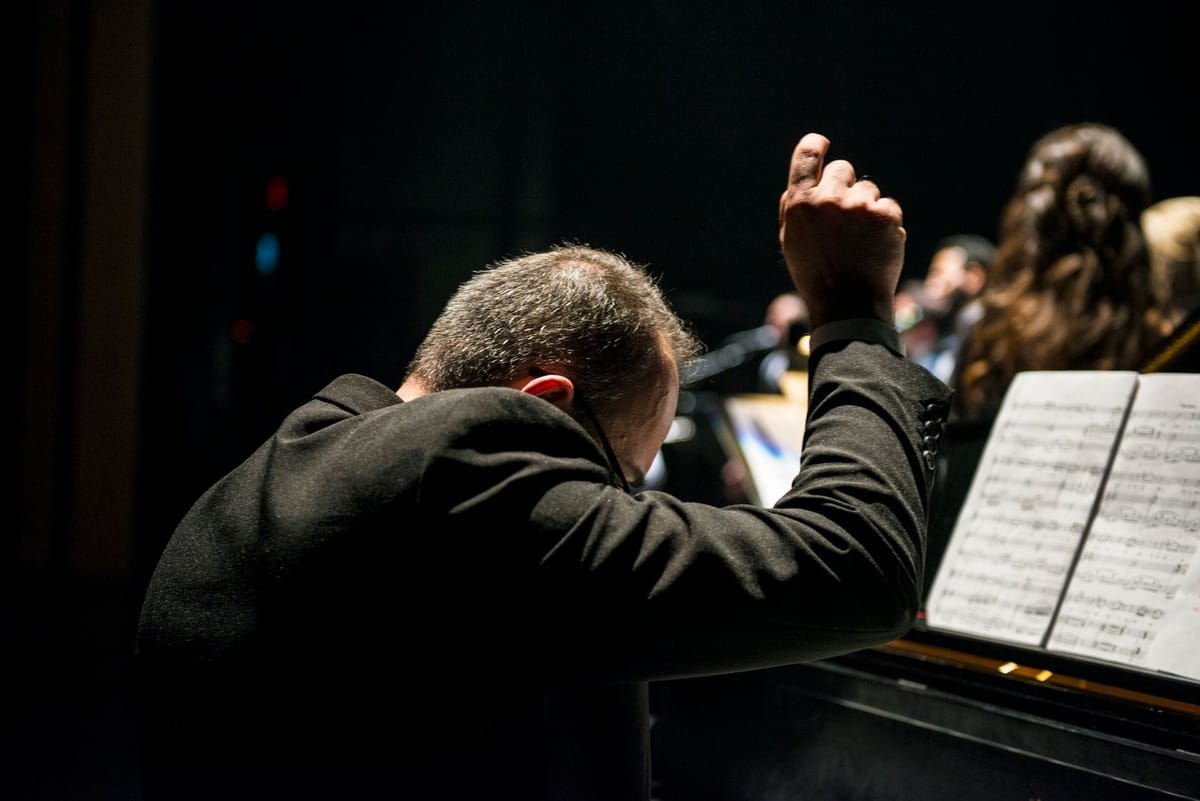
Valencia's music scene lives on a rare split. On one side, the highest density of amateur wind bands and music societies in the world: more than 540 federated societies, according to the regional federation (FSMCV). On the other, a pop and electronic history that runs from crooner Nino Bravo to the legendary Ruta del Bakalao. In between sit world class classical figures (the guitarist Francisco Tárrega, whose little waltz became the Nokia ringtone, and Joaquín Rodrigo of Concierto de Aranjuez fame), two grand music halls, and, since 2012, the first international campus of Berklee College of Music. Here is how to find your way around.
Why is Valencia the world capital of wind bands?
Because nowhere else has so many amateur music societies per head. The Federation of Music Societies of the Valencian Community (FSMCV), founded in 1968, groups more than 540 societies, of which about 30% are over a hundred years old and 2% more than two hundred, per the federation itself. Together they run a network of over 600 music schools with some 60,000 students and more than 5,000 teachers. In many towns the banda is the first social club: you join as a child and play for life, and two rival societies often coexist in the same place. The tradition was recognised as Intangible Cultural Heritage by the regional government in 2018, then by the Spanish State in 2021.
Which great classical names did Valencia produce?
Several of world rank, often little known abroad. The most surprising is Francisco Tárrega, born in Vila-real (Castellón) on 21 November 1852 and considered the father of modern classical guitar technique (Recuerdos de la Alhambra, Capricho Árabe). In 1902 he wrote a piece, Gran Vals, and thirteen of its notes became the famous Nokia ringtone, first heard on the 2110 model in 1994. According to Spain's National Library, it is probably the most heard melody on the planet, and it comes from a 19th century Valencian's guitar. Add Joaquín Rodrigo, born in Sagunto in 1901, blind from childhood, who wrote the Concierto de Aranjuez in 1939, one of the most played pieces of Spanish classical music; José Serrano, born in Sueca in 1873, who composed the music of what is now the region's anthem (1909); and Raimon, born in Xàtiva in 1940, a key voice of protest song.
Where can you hear classical music and opera in Valencia?
In two complementary venues. The Palau de la Música, opened in 1987 on the old Turia riverbed, is home to the Orquesta de Valencia, the municipal orchestra founded in 1943. The Palau de les Arts Reina Sofía, the opera house designed by Santiago Calatrava inside the City of Arts and Sciences, opened on 8 October 2005 and gave its first opera in 2006. It is home to the Orquestra de la Comunitat Valenciana, shaped by conductor Lorin Maazel, and has hosted Zubin Mehta and Spain's first full staging of Wagner's Ring.
| Venue | Profile | Where |
|---|---|---|
| Palau de la Música | Classical, home of the Orquesta de Valencia | Turia gardens |
| Palau de les Arts Reina Sofía | Opera and grand repertoire | City of Arts |
| Loco Club | Indie, rock, folk, pop | Carrer de l'Erudit Orellana |
| 16 Toneladas | Rock, punk, alternative | Valencia |
| Black Note Club | Rock, soul, funk, world (since 1993) | Valencia |
What was the Ruta del Bakalao?
The biggest clubbing phenomenon Spain has ever seen, born in Valencia in the 1980s. Also known as Ruta Destroy, it was the circuit of clubs along the El Saler road (CV-500), where thousands of young people partied, sometimes for 72 hours straight, from the mid 1980s into the first half of the 1990s. It was not the cliché of mindless noise: it grew out of the movida valenciana, a cutting edge scene where DJs championed the best of new wave and European electronic music. Its temples became legend: Barraca, open since 1965 and transformed in 1981 when DJs Juan Santamaría and Carlos Simó played Depeche Mode, The Cure and Joy Division; Chocolate, opened in 1980 in an old rice warehouse; Spook Factory, built in 1984; plus Espiral, NOD, Puzzle and ACTV, the last surviving as Akuarela Playa.
Which Valencian bands and singers should you know?
There is something for every era, from crooner to Valencian language rap. The most popular remains Nino Bravo (real name Luis Manuel Ferri Llopis), born in Aielo de Malferit in 1944 and raised in Valencia, whose hits Un beso y una flor and Libre marked Spanish pop before his death in a car crash in 1973, aged 28. In the 1990s a Valencian trio broke through nationally: Seguridad Social, Revólver and Presuntos Implicados. Then came the Valencian language wave: Obrint Pas (ska-punk, 1993 to 2014), La Raíz (mestizo rock from Gandía, 2006 to 2018, back in 2024) and Zoo (from Gandía, since 2014). On the indie side, La Habitación Roja (formed 1994) is a landmark, and for mainstream pop, Bombai (2015) scored big with Solo si es contigo.
| Artist or band | Era | Style | Worth knowing |
|---|---|---|---|
| Francisco Tárrega | 19th c. | Classical guitar | Father of modern guitar; his Gran Vals became the Nokia tune |
| Joaquín Rodrigo | 20th c. | Classical | Concierto de Aranjuez (1939); born in Sagunto, blind from childhood |
| Nino Bravo | 1970s | Pop, ballads | Un beso y una flor, Libre; died at 28 in 1973 |
| Seguridad Social / Revólver / Presuntos Implicados | 1980s-90s | Pop-rock | The Valencian trio that broke through nationally |
| Obrint Pas | 1993-2014 | Ska-punk in Valencian | Anthem of a generation |
| La Raíz | 2006-2018, back 2024 | Mestizo rock | From Gandía to the world; farewell show for 20,000 |
| Zoo | since 2014 | Hip-hop, electro in Valencian | Called a "historical anomaly" by the daily Ara |
| Bombai | since 2015 | Pop | Double platinum with Solo si es contigo (2017) |
Where to catch concerts and festivals?
For year round gigs, the city relies on a handful of iconic venues (see the table above). In summer, the region becomes one of Spain's great festival grounds. The dates below are those announced for 2026.
| Festival | Where | 2026 dates | Style |
|---|---|---|---|
| Festival de les Arts | Valencia (Viveros gardens) | 5-6 June | Indie, pop |
| FIB | Benicàssim | 16-18 July | Rock, electro |
| Arenal Sound | Burriana | 30 July - 2 August | Pop, electro, one of Spain's biggest beach festivals |
Where can you learn music in Valencia?
At every level, and often cheaply. The base is the network of neighbourhood music schools run by the music societies (600+ centres, per the FSMCV), where most Valencian children start. Above them sit official conservatories: the municipal José Iturbi (which traces back to schools founded in 1869), a professional conservatory, and at the top the "Joaquín Rodrigo" higher conservatory. For modern music, Berklee College of Music opened its first international campus here in September 2012, inside the Palau de les Arts building, with master's programmes in film scoring, performance, production and the music business. Private schools like ESMAR also award higher music degrees, and for one to one lessons, platforms such as Superprof or Tusclasesparticulares list hundreds of teachers, typically around 15 to 20 euros an hour. To keep exploring Valencian culture, read our guides to the Valencia's theatre scene and the Valencia's dance scene scenes, and to painting and street art.
Frequently asked questions about music in Valencia
Who is the most famous Valencian musician?
It depends on the audience. For the general public it is Nino Bravo, the 1970s ballad singer. For classical music, guitarist Francisco Tárrega and composer Joaquín Rodrigo, both of world rank.
What is a Valencian banda?
A wind and percussion band run by a local music society. The Valencian Community has the highest density in the world, with more than 540 federated societies and a network of over 600 music schools, per the FSMCV.
Does the Ruta del Bakalao still exist?
Not as in the 1980s and 90s. Most of the legendary clubs have closed, though a few survived or reinvented themselves, like the former ACTV, now Akuarela Playa. It mostly lives on as memory and retrospectives.
Where can you study modern music in Valencia?
At Berklee College of Music's Valencia campus, opened in 2012 inside the Palau de les Arts, with master's programmes. For the classical path, the "Joaquín Rodrigo" higher conservatory is the public reference.
Which summer festival should you pick?
For indie and pop in the city, Festival de les Arts (early June). For a big beach festival, Arenal Sound in Burriana (late July to early August). FIB in Benicàssim, more rock and electro, completes the trio.
Sources (facts cross-checked and rewritten, never copied): Federation of Music Societies of the Valencian Community (FSMCV); regional government and Spanish State (intangible heritage listings 2018 and 2021); Spain's National Library and El Español (Tárrega and the Nokia tune); Wikipedia (Palau de les Arts, Palau de la Música, Orquesta de Valencia, Nino Bravo, Ruta Destroy, Obrint Pas, La Raíz); Berklee Valencia; Valencian press and Ara (current scene, Zoo); official venue and festival sites for 2026 dates. Consulted in July 2026.
Verified in July 2026. Line-ups, festival dates and venues can change: check with the venues and organisers before you travel. This article was prepared with the help of AI, then cross-checked, verified and edited by our newsroom, which takes editorial responsibility for it.
Suis-nous sur Instagram : @thedailyvalencia
Le Livre blanc 2026 de l'expat à Valencia
NIE, empadronamiento, fiscalité, école, logement : tout l'essentiel pour s'installer, réuni dans un guide PDF. Laisse ton e-mail, on te l'envoie.
🎉 Et voilà ! Ton Livre blanc 2026 de l'expat s'ouvre ici :
Ouvrir le Livre blanc 2026Dernière étape pour rejoindre l'aventure : confirme ton inscription dans l'e-mail qu'on vient de t'envoyer.
Réagis à cet article