
Dance in Valencia: what to know, from Nacho Duato to the muixeranga
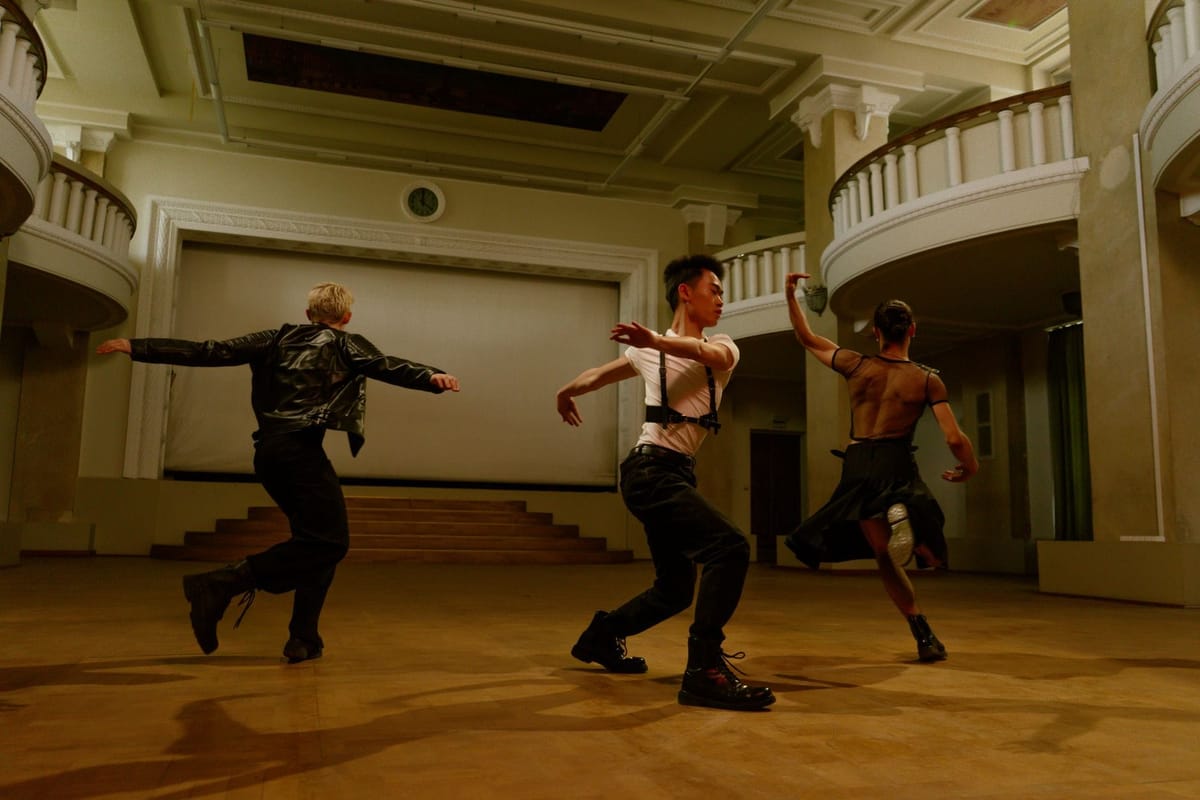
Dance in Valencia begins with a global star: Nacho Duato, born in Rocafort in 1957, one of the greatest Spanish choreographers. Around him the city lines up a major festival, Dansa València, founded in 1988, a pool of contemporary companies (from Ananda Dansa to OtraDanza, Titoyaya, Maduixa and Taiat), a tradition listed by UNESCO, the muixeranga of Algemesí, and a public higher school that carries Duato's own name. Here is how to find your way around.
Who is the great Valencian dance star?
Nacho Duato, born Juan Ignacio Duato Barcia in Rocafort, near Valencia, on 8 January 1957. Trained far from home, at the Rambert School in London, Maurice Béjart's Mudra school in Brussels and the Alvin Ailey centre in New York, he debuted in 1980 with the Cullberg Ballet in Stockholm, then joined Nederlands Dans Theater under Jirí Kylián, becoming resident choreographer there in 1988. His first piece, Jardí tancat (1983), won a top international prize in Cologne. From 1990 to 2010 he directed the Compañía Nacional de Danza and created more than thirty works, before leading major ballets in Saint Petersburg and Berlin. Local recognition: Valencia's higher dance conservatory bears his name.
Which dance companies should you know?
A handful of companies carry Valencian dance, mostly contemporary. The most emblematic is Ananda Dansa, a pioneer that bowed out after thirty-eight years with the show Âtman, el comiat at the Palau de les Arts. Alongside it, the public company, the Ballet de Teatres de la Generalitat Valenciana, handles repertoire and new work, while the independent scene rests on OtraDanza, founded in 2007 by choreographer Asun Noales and a regular on international tours, on Titoyaya Dansa, whose director Gustavo Ramírez Sansano is a choreographer in demand worldwide, on Cia Maduixa from Sueca, awarded for its family shows, and on Taiat Dansa, known for its danced re-readings of classics.
| Company | Profile | Worth knowing |
|---|---|---|
| Ananda Dansa | Contemporary (Valencia) | Pioneer; farewell after 38 years with Âtman at the Palau de les Arts |
| Ballet de Teatres de la Generalitat | Public company | The main Valencian institutional company |
| OtraDanza (Asun Noales) | Contemporary | Founded in 2007; tours across Europe and Latin America |
| Titoyaya Dansa | Contemporary | Director Gustavo Ramírez Sansano, an internationally invited choreographer |
| Cia Maduixa | Dance and young audiences (Sueca) | Award winning company, family shows |
| Taiat Dansa | Contemporary | Danced re-readings of classics, such as Lorca |
What is the Dansa València festival?
It is the city's great contemporary dance event, founded in 1988. Run by the regional government through the Institut Valencià de Cultura, with the city and provincial councils, its historic mission is to support creation and young Valencian choreographers while welcoming national and international companies. Its 39th edition runs from 11 to 19 April 2026, with dozens of shows across the theatres and streets of Valencia. If you keep one date to discover today's dance in Valencia, this is it.
Where do people dance in Valencia?
All over, from grand halls to more intimate spaces. The Palau de les Arts hosts large formats and ballet, the Teatre Rialto and the Centre del Carme are key stages of the Dansa València festival, the Teatre El Musical programmes dance in the Cabanyal, and places like La Rambleta carry the smaller forms.
| Venue | For | Where |
|---|---|---|
| Palau de les Arts Reina Sofía | Large formats, ballet | City of Arts |
| Teatre Rialto | Contemporary dance, Dansa València | Plaça de l'Ajuntament |
| Centre del Carme | Current forms, festival events | El Carme |
| La Rambleta | Intimate forms, new work | Valencia |
What about traditional Valencian dance?
It is very much alive, and one of its forms is even UNESCO listed. The most spectacular is the muixeranga, a set of dances and human towers that accompany the festivals of several towns. The one in Algemesí, at the heart of the Festa de la Mare de Déu de la Salut, is inscribed on UNESCO's list of intangible cultural heritage of humanity. Alongside it, the dansà, a popular street dance, is performed at big festivals, often to the sound of the dolçaina and the tabal, and Valencia also has flamenco venues and schools, even if the city is not its birthplace.
On the map: Algemesí, the town of the UNESCO listed muixeranga . About thirty minutes from Valencia, see well worth a short day trip.
Where to learn dance in Valencia?
At the top, in a public higher school: the Higher Conservatory of Dance of Valencia, which carries Nacho Duato's name. Opened in 2002-2003 and part of the higher arts institute since 2007, it awards the higher dance degree in two tracks, dance pedagogy (Spanish, classical and social dance) and choreography and performance (contemporary). It sits on Camino de Vera, next to the Polytechnic University campus. Below it, a professional conservatory and many private academies teach classical, contemporary, flamenco and urban dance for all ages. To keep exploring, see our guides to the Valencia's theatre scene and Valencia's music scene scenes, and to painting and street art.
Frequently asked questions about dance in Valencia
Who is the most famous Valencian dancer?
Nacho Duato, born in Rocafort (Valencia) in 1957. A world renowned choreographer, he led the Compañía Nacional de Danza from 1990 to 2010, then major ballets in Saint Petersburg and Berlin. Valencia's higher dance conservatory bears his name.
When is the Dansa València festival?
In spring. Founded in 1988, it holds its 39th edition from 11 to 19 April 2026. It is the city's main contemporary dance event, run by the Institut Valencià de Cultura.
What is the muixeranga?
A set of dances and human towers linked to traditional Valencian festivals. The best known is in Algemesí, part of the Festa de la Mare de Déu de la Salut and inscribed on UNESCO's intangible cultural heritage list.
Where can you study dance in Valencia?
At the "Nacho Duato" Higher Conservatory of Dance, the region's only public higher school, with two tracks (pedagogy, and choreography and performance). A professional conservatory and many private academies round out the offer.
Can you see dance all year round?
Yes. Beyond the Dansa València festival, the Palau de les Arts, the Teatre Rialto, the Centre del Carme, the Teatre El Musical and La Rambleta programme dance through the season.
Sources (facts cross-checked and rewritten, never copied): Wikipedia, Danza.es and the Academy of Performing Arts (Nacho Duato); the "Nacho Duato" Higher Conservatory of Dance and the higher arts institute (training); Institut Valencià de Cultura and Dansa València (festival and 2026 dates); company sites and documentation (Ananda Dansa, OtraDanza and Asun Noales, Titoyaya Dansa, Cia Maduixa, Taiat Dansa, Ballet de Teatres de la Generalitat); Wikipedia and UNESCO (muixeranga of Algemesí). Consulted in July 2026.
Verified in July 2026. Programming, festival dates and venues can change: check with the venues and organisers before you travel. This article was prepared with the help of AI, then cross-checked, verified and edited by our newsroom, which takes editorial responsibility for it.
Suis-nous sur Instagram : @thedailyvalencia
Le Livre blanc 2026 de l'expat à Valencia
NIE, empadronamiento, fiscalité, école, logement : tout l'essentiel pour s'installer, réuni dans un guide PDF. Laisse ton e-mail, on te l'envoie.
🎉 Et voilà ! Ton Livre blanc 2026 de l'expat s'ouvre ici :
Ouvrir le Livre blanc 2026Dernière étape pour rejoindre l'aventure : confirme ton inscription dans l'e-mail qu'on vient de t'envoyer.
Réagis à cet article