
Valencia's huerta: farmland, the Water Tribunal and can you live there?
The huerta of Valencia is the ring of irrigated farmland that wraps around the city, roughly 23,000 hectares in its strict definition according to the University of Valencia's Horta-Valencia chair, and a Globally Important Agricultural Heritage System recognised by the FAO since 2019. You can live there, but under tight rules: a minimum plot of one hectare, buildable area capped at 2% of the land, and a ban on enlarging existing homes, with narrow exceptions opened by a 2025 decree.
What are the key facts about the huerta?
The historic huerta covers about 23,000 hectares across 40 municipalities; counting the wider zone, it reaches close to 63,000 hectares, according to the Consell de l'Horta de València. It has been a FAO Globally Important Agricultural Heritage System since 2019 and holds around 6,000 farms, most of them under one hectare. The Water Tribunal (Tribunal de las Aguas), which has settled irrigation disputes since Islamic times, has been on UNESCO's Intangible Cultural Heritage list since 2009. The 2018 protection law was amended by a decree of 4 February 2025, ratified by the Valencian Parliament on 20 February 2025, scrapping the Consell de l'Horta and opening building exceptions. The DANA storm of 29 October 2024 hit 21,137 hectares of crops, with farm damage of about 1.38 billion euros, according to the Valencian press. Only 58 traditional barracas were still standing in 2026, down from nearly 2,000 recorded in the 1929 land registry, according to Cope.
| Marker | Figure | Source |
|---|---|---|
| Historic huerta area | About 23,000 hectares, 40 municipalities | Consell de l'Horta de València |
| Extended huerta area | Close to 63,000 hectares, 44 municipalities | Consell de l'Horta de València |
| Age | About 1,200 years | UNRIC |
| FAO recognition | Globally Important Agricultural Heritage System since 2019 | FAO / University of Valencia |
| Number of farms | About 6,000, mostly under one hectare | University of Valencia |
What exactly is the huerta of Valencia?
The huerta is an irrigated farming landscape roughly 1,200 years old, born with the Muslim conquest in the early Middle Ages, which built a dense web of irrigation channels (acequias) and weirs (azudes) around Valencia, according to UNRIC and the University of Valencia's Horta-Valencia chair. Part of that network drew on the Turia river, whose former bed through the city is now the Turia Garden. Its size depends on the perimeter you choose: the historic zone watered by the Water Tribunal and the Acequia Real de Moncada spans about 23,000 hectares over 40 towns, while a broader definition across 44 towns pushes it to nearly 63,000 hectares.
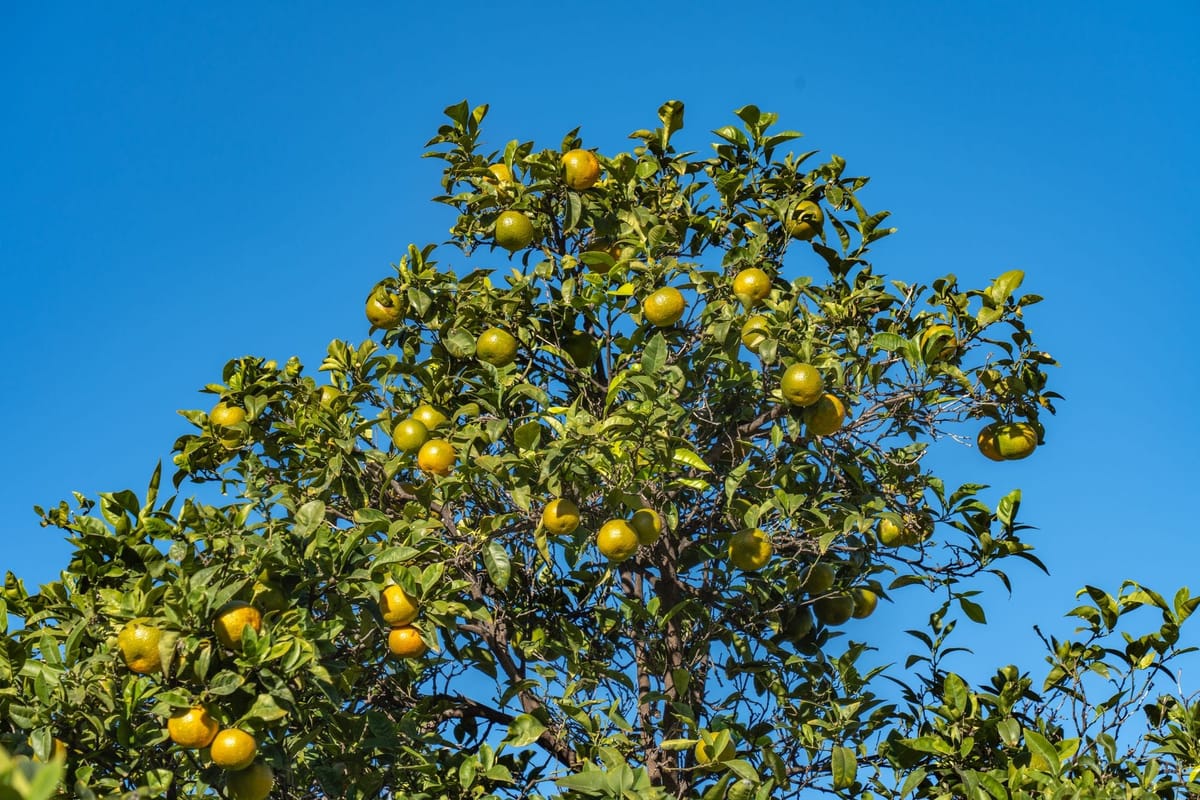
The landscape is a tight grid of canals, farm tracks and traditional buildings such as alquerías and barracas. Around 80% of the cultivated area is planted with fruit trees, mostly citrus, the rest with some fifty different vegetables, according to the University of Valencia. To the south, the huerta blends into the rice paddies of the Albufera, where you can easily reach sunset over the lagoon.
Among those crops, the tiger nut (chufa) grown around Alboraya and Almàssera , the base of the drink orxata, is among the most iconic, even if it covers far less ground than citrus.
How does the Water Tribunal, Europe's oldest still-active court of justice, work?
The Tribunal de las Aguas de la Vega de Valencia has settled disputes over water and irrigation channels among huerta farmers for centuries. It is made up of eight trustees (síndicos), democratically elected by the irrigation communities they represent (Tormos, Rascaña and Mestalla on the north bank of the Turia; Quart, Benàger-Faitanar, Favara, Mislata and Rovella on the south bank). Each trustee must himself be a farmer and owner who works his own land, according to the Generalitat Valenciana.
Every Thursday at noon, the eight trustees gather in front of the Apostles' Door of Valencia Cathedral , wearing the traditional black farmers' smock, to rule on cases through a fast, oral and public procedure. UNESCO listed the institution as Intangible Cultural Heritage in 2009, alongside the Council of Wise Men of the Murcia huerta.
What legal protection does the huerta have, and why is the law disputed in 2026?
The huerta has been protected since 2018 by Generalitat law 5/2018, passed after a large grassroots campaign, aimed at preserving, restoring and revitalising it for its farming, environmental, scenic, architectural and cultural value. At the time of adoption the law was calculated to shield up to 11,000 hectares of farmland, and it created a dedicated governing body, the Consell de l'Horta.
On 4 February 2025, the regional government (then led by the Partido Popular) approved a decree amending law 5/2018 and the huerta's territorial plan, ratified by the Valencian Parliament on 20 February 2025. The reform scraps the Consell de l'Horta, centralises permit decisions at regional level to speed them up, and opens exceptions to the building ban on some protected land, according to the official regional gazette (DOGV) and Valencia Plaza. The regional government justifies the changes by the social and economic pressure of the housing crisis and the October 2024 DANA damage, according to Valencia News.
The Per l'Horta collective and part of the opposition contest the reform, arguing that building over the huerta answers neither a demographic need (the city is said to have lost about 30,000 residents in five years, per Per l'Horta) nor a shortage of new housing, given an estimated 60,000 empty homes in the city. Protests have called for the revision to be suspended, branding it a risk of uncontrolled sprawl, according to Valencia Plaza. In parallel, Valencia city hall has launched a review of its 1988 master plan, fuelling the same tensions over building on currently protected huerta land.
What was the impact of the October 2024 DANA on the huerta?
The DANA of 29 October 2024, which killed at least 104 people in the Valencia region and southern Spain, hit peri-urban farming hard. According to farm data cited by the press, 21,137 hectares of crops awaiting harvest were affected, including 15,908 hectares of citrus, 3,327 hectares of persimmon, 1,149 hectares of vegetables, 603 hectares of ornamentals and nurseries, and 150 hectares of avocado. On some huerta farms, crop losses reached 100%, according to El Independiente.
The farm sector puts total damage at about 1.38 billion euros, with 70% of farmers still without access to aid a year on, per the same sources. Beyond lost harvests, fully flooded orchards later died, and the huerta's channels, tracks and stone walls suffered lasting damage. The government explicitly cites this disaster among its reasons for the 2025 reform of the huerta law.
Can you live in the huerta of Valencia, and what does the law say about building?
Yes, but under strict limits, and building a brand-new home in a protected zone is almost impossible. The Valencian land-use law (5/2014) allows housing on rural non-developable land in principle, but lets each town set its own rules, while law 10/2004 on non-developable land and the huerta law impose tight conditions: the plot must be at least one hectare in a single piece, and buildable area cannot exceed 2% of it, that is 200 sqm per hectare, with the rest kept for farming or nature, according to Icasasecologicas and Leukos Architecture.
For existing homes, you can carry out upkeep and improvements, but neither enlarge the footprint nor add a storey. Isolated houses built between 1975 and 20 August 2014 on non-developable land can be regularised through a so-called territorial-impact minimisation procedure, according to Regularizatucasarustica. In areas covered by the huerta law itself, only buildings foreseen in the territorial plan (PATODHV) are allowed, and restoring a ruin cannot exceed its original footprint, capped at ground floor plus one storey. Decree 4/2025 did open new exceptions, which remain politically contested.
In practice, living in the huerta today mostly means buying or renting an existing, regularised alquería rather than building new. Traditional barracas have all but vanished: only 58 were still standing in 2026, down from nearly 2,000 in the 1929 registry, due to perishable materials and urban expansion, according to Cope. For a more conventional move into the city, our guide to your first 90 days in Valencia covers housing.
| Marker | Figure | Source |
|---|---|---|
| Minimum plot to build | 1 hectare in a single piece | Icasasecologicas |
| Maximum buildable area | 2% of the plot (200 sqm/hectare) | Icasasecologicas |
| Regularisation possible | Isolated houses built 1975 to 20/08/2014 | Regularizatucasarustica |
| Barracas still standing in 2026 | 58, down from about 2,000 in 1929 | Cope |
| Huerta law reform | Decree 4/2025, ratified 20 February 2025 | Valencian Parliament / DOGV |
Frequently asked questions about the huerta of Valencia
Is the huerta of Valencia a nature park?
No. It is not a protected natural space in the classic sense but a living farming landscape worked by thousands of small holdings. Its protection comes from a specific regional law, law 5/2018 on the Huerta de València, not from the nature-park regime.
Can you visit the huerta and meet farmers?
The sources consulted do not detail a precise official tourist offer. Several areas, notably around Alboraya, are nonetheless reachable on foot or by bike, and some local farms, including tiger-nut growers, are visible from the rural tracks.
Why is the huerta law so contentious in 2026?
Because decree 4/2025, which amended the 2018 law, scrapped the dedicated governing body (the Consell de l'Horta) and opened building exceptions on previously protected land. The regional government cites the housing crisis and DANA fallout, while collectives such as Per l'Horta warn of unjustified sprawl.
Is it legal to build a new house in the protected huerta?
In principle no, within areas covered by the huerta law: only buildings foreseen in the territorial plan are allowed, and restoration cannot exceed the original footprint. The 2025 decree added occasional exceptions, but any project must be checked with the town hall and the Generalitat before buying or building.
Sources (facts cross-checked and rewritten, never copied): Consell de l'Horta de València, University of Valencia (Horta-Valencia chair), UNRIC, Generalitat Valenciana, DOGV and Valencian Parliament (legal texts), Valencia Plaza, Valencia News, El Independiente, Cope, Icasasecologicas, Leukos Architecture, Regularizatucasarustica, consulted in July 2026. Key figures (huerta area, DANA-hit surfaces, reform dates, remaining barracas) were verified against these sources.
Information verified in July 2026. The huerta's legal framework is changing fast and is politically contested: check the exact status of any plot with the relevant town hall and the Generalitat Valenciana before buying or building. This article was prepared with the help of AI, then cross-checked, verified and edited by our newsroom, which takes editorial responsibility for it.
Suis-nous sur Instagram : @thedailyvalencia
Le Livre blanc 2026 de l'expat à Valencia
NIE, empadronamiento, fiscalité, école, logement : tout l'essentiel pour s'installer, réuni dans un guide PDF. Laisse ton e-mail, on te l'envoie.
🎉 Et voilà ! Ton Livre blanc 2026 de l'expat s'ouvre ici :
Ouvrir le Livre blanc 2026Dernière étape pour rejoindre l'aventure : confirme ton inscription dans l'e-mail qu'on vient de t'envoyer.
Réagis à cet article