
Why do Valencians love the Turia so much, a river that no longer even runs through town?
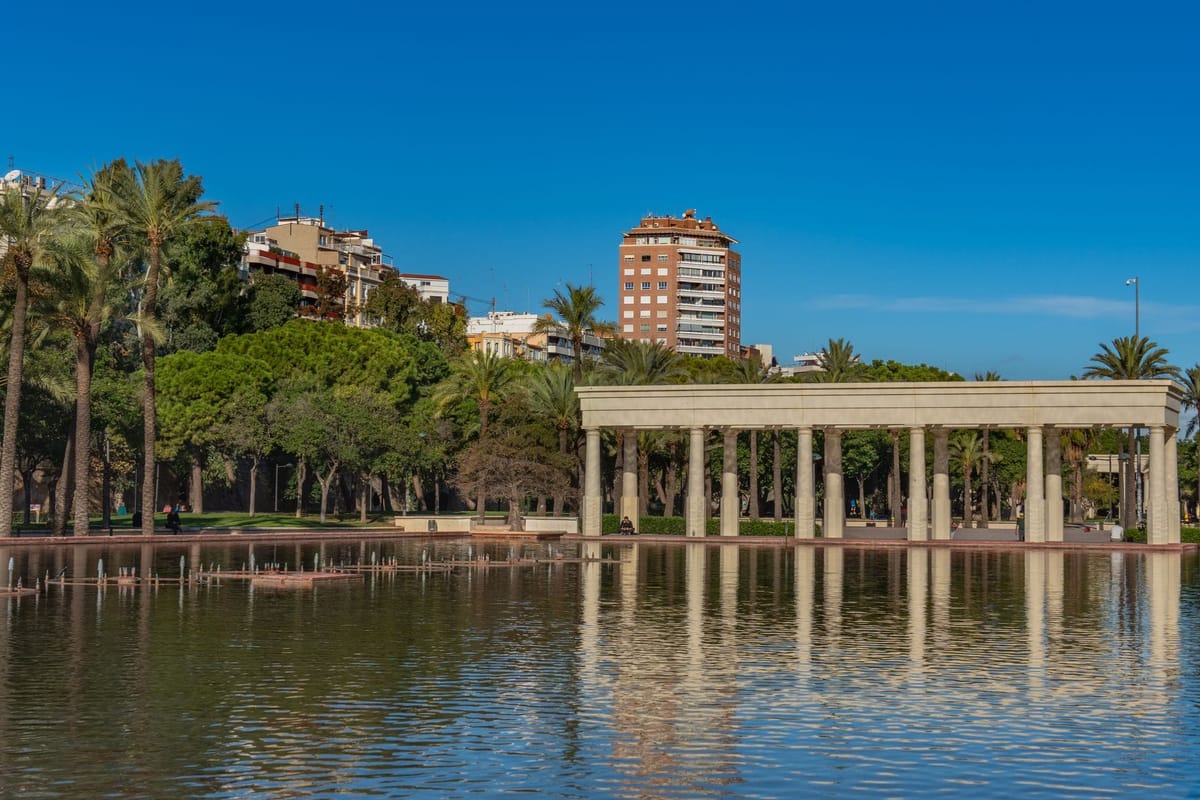
Because they saved it twice. First by diverting it out of the city after the deadly 1957 flood, then by refusing, in the 1970s, to let the motorway planned in its place be built. The old bed of the Turia is now a 9 kilometre garden that crosses Valencia from west to east, and this story of a river rescued by its own city explains much of why Valencians are so attached to a watercourse that no longer even runs through town.
What are the key facts in a nutshell?
The Turia was diverted out of Valencia between 1964 and 1973, after the deadly flood of 14 October 1957. Its former bed became the Jardin del Turia, roughly 9 kilometres of gardens whose first sections opened in 1987. Valencians rejected, through a citizens' campaign, the motorway that was planned in place of the garden. The Water Court, or Tribunal de las Aguas, listed by UNESCO in 2009, has managed irrigation drawn from the Turia for centuries. Finally, the protective role of the new riverbed during the 2024 DANA storm is still debated among experts, and we do not take sides.
| Stage | Year | What happens |
|---|---|---|
| Devastating flood | 1957 | At least 81 dead, entire districts submerged |
| Approval of the Solucion Sur plan | 1961 | Decision to divert the river out of the city |
| New riverbed works | 1964 to 1973 | Construction of the new cauce, 12 km long, 175 m wide |
| Citizens' campaign | from 1972 | Rejection of the motorway project in the old bed |
| Contract with Ricardo Bofill | 1981 | Landscaping plan for the Jardin del Turia begins |
| First sections open | 1987 | Birth of today's Jardin del Turia |
Why did the Turia frighten Valencians for so long?
Because it overflowed regularly, sometimes with deadly consequences, going back to Roman times. According to the monograph by Pilar Carmona and Joan Olmos cited by Tiempo.com, 22 overflows of the Turia are recorded between 1321 and 1957, and traces of flooding date back even to the Roman and Muslim periods, found during excavations on the Plaza de l'Almoina. The greatest disaster remains the flood of 14 October 1957: according to Hoy Valencia, more than 600 litres of water per square metre fell in a single night over the Turia basin, triggering a surge that killed at least 81 people and swallowed whole neighbourhoods such as El Cabanyal and Nazaret.
How did the Turia shape Valencian identity before it ever threatened the city?
By irrigating the huerta, the farmland that has fed Valencia for centuries. According to the Catedra del Agua at the Universitat Jaume I, huerta and city long formed a single organism, with the huerta supplying food sold directly in the streets by farming families. Eight main acequias (irrigation channels), built around 2,100 years ago according to Guiarte Valencia, still draw water from the Turia today to irrigate the plain. To understand this agricultural belt, see our guide to the Valencia huerta.
These channels have been managed since the Muslim era by the Tribunal de las Aguas, which meets every Thursday outside Valencia's cathedral to settle disputes between farmers, in Valencian and out loud. Listed as UNESCO intangible cultural heritage in 2009, this court is regarded as one of the oldest justice institutions still active in Europe.
What happened after the 1957 flood?
The city decided to divert the river. After the disaster, three options were studied: a northern diversion, a dam at Vilamarxant, or a new bed south of the city. It was this "Solucion Sur" that was chosen and approved by the Spanish Cortes in 1961, according to the blog of the Aguas de Valencia group. The works, carried out from 1964 to 1973, created a new cauce 12 kilometres long and 175 metres wide, able to absorb 5,000 cubic metres per second, well above the 3,700 to 3,800 cubic metres per second recorded in 1957. The river then left the centre of Valencia for good, flowing into the sea three kilometres further south at Pinedo.
Why did Valencians refuse to turn the dry bed into a motorway?
Because they wanted a green space, not a ring road. Once the river was diverted, the State, which owned the 110 hectares left dry, planned to run an urban motorway linking Madrid to the coast through it, in line with the 1966 town-planning scheme, according to Urban Networks. The project ran into a citizens' campaign carried by the slogan "El llit del riu es nostre i el volem verd" (the riverbed is ours and we want it green). In 1979, Valencia city council ruled definitively in favour of a green space, and in 1981 it signed a contract with architect Ricardo Bofill to design the landscaping of the future garden, whose first sections opened in 1987.
How did the Jardin del Turia become the beating heart of the city today?
By hosting just about everything Valencians love to do outdoors. The Jardin del Turia now stretches over roughly 9 kilometres, from the Palau de la Musica to the City of Arts and Sciences, with sports pitches, cycle paths, playgrounds and wide shaded lawns. According to Aqui Medios de Comunicacion, the park draws around three million visits a year, helped by the City of Arts and Sciences built as its extension. It is also in the garden that the Nit del Foc unfolds, one of the great pyrotechnic shows of Las Fallas, and where several fallera commissions install their monuments in March. For a full tour of the park, its sections and its future, see our Turia Garden guide.
| Place | What you see there | Map |
|---|---|---|
| Jardin del Turia | The old bed turned into 9 km of gardens | |
| City of Arts and Sciences | The futuristic complex at the end of the garden | |
| Tribunal de las Aguas | The Thursday water court outside the cathedral | |
| New river mouth (Plan Sur) | Where the Turia now flows into the sea |
Can the Turia still flood Valencia today?
In theory no, thanks to the new cauce, but the question is still debated. During the DANA storm of October 2024, the new bed fulfilled its protective role for the city centre, according to professor Luis Mediero, quoted by the Bintercanarias blog. Conversely, researcher Julia Martinez, of the Fundacion Nueva Cultura del Agua, argues that this same channel may have acted as a wall diverting water towards municipalities further south during that episode. The two readings do not agree on the scale of this effect, so we do not take sides. This controversy has also revived, on the side of former mayor Joan Ribo, the idea of "renaturalising" the new cauce, a proposal itself contested for its possible impact on the capacity to drain floodwater.
Frequently asked questions about the Turia and the Jardin del Turia
Does the Turia still flow through central Valencia?
No. Since the Plan Sur works completed in 1973, the river has been diverted into a new bed south of the city, which flows into the sea at Pinedo. The old bed remained in the centre, but was turned into a garden.
Why did the dry bed become a garden rather than a motorway?
Because a citizens' campaign in the 1970s, carried by the slogan "el llit del riu es nostre i el volem verd", pressured Valencia city council into abandoning the motorway that the State had initially planned for the land.
What is the Tribunal de las Aguas and how is it linked to the Turia?
It is a historic court that has settled irrigation disputes since the Muslim era between the eight acequias that draw from the Turia to water the Valencia huerta. It still meets every Thursday outside the cathedral and was listed by UNESCO in 2009.
Is the Jardin del Turia dangerous during heavy rain?
The new cauce, separate from the garden, was sized to absorb floods far larger than the one in 1957, and it limited damage to the city of Valencia during the 2024 DANA. The garden itself, in the old bed, no longer receives the river's water day to day.
Sources (facts cross-checked and rewritten, never copied): Tiempo.com (timeline of historic floods and the Pilar Carmona and Joan Olmos monograph), Hoy Valencia and Aqui Medios de Comunicacion (the 1957 flood and transformation into a garden), the 125 Aniversario blog of Grupo Aguas de Valencia and Urban Networks (Plan Sur and the citizens' campaign), Catedra del Agua at the Universitat Jaume I and Guiarte Valencia (Tribunal de las Aguas and acequias), the Bintercanarias blog (2024 DANA and the debate over the new cauce), consulted in July 2026. The key dates of the Plan Sur and of the Jardin del Turia landscaping were cross-checked across several of these sources.
Information verified in July 2026. The debate over the role of the Turia's new bed in flooding remains open among experts, and redevelopment plans may change. This article was prepared with the help of AI, then cross-checked, verified and proofread by our newsroom, which takes editorial responsibility for it.
Suis-nous sur Instagram : @thedailyvalencia
Le Livre blanc 2026 de l'expat à Valencia
NIE, empadronamiento, fiscalité, école, logement : tout l'essentiel pour s'installer, réuni dans un guide PDF. Laisse ton e-mail, on te l'envoie.
🎉 Et voilà ! Ton Livre blanc 2026 de l'expat s'ouvre ici :
Ouvrir le Livre blanc 2026Dernière étape pour rejoindre l'aventure : confirme ton inscription dans l'e-mail qu'on vient de t'envoyer.
Réagis à cet article