
Valencia's fallas casals: the neighbourhood life that runs all year
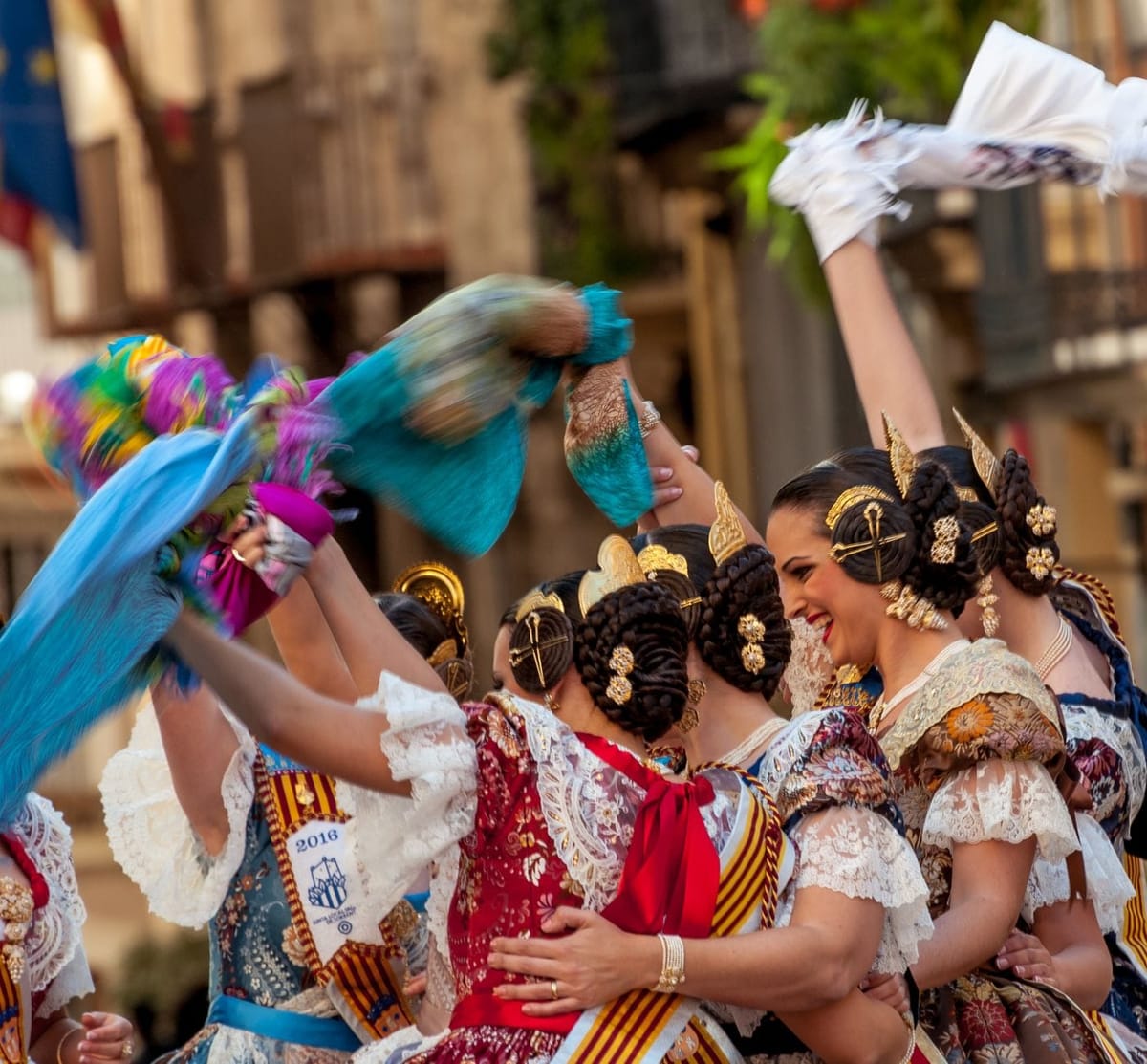
Yes, Valencia's falla life carries on far beyond the five days of March: every neighbourhood falla runs a casal, a members' clubhouse that stays open almost all year, where neighbours and families gather for workshops, communal meals, raffles, charity drives and, in June, the Sant Joan bonfires. A comisión fallera is really a permanent neighbourhood association, one of the densest forms of community life in the city.
The short version: what should you know?
According to the Junta Central Fallera, cited by Hello Valencia, Valencia counted around 384 comisiones falleras in 2024, and the Ayuntamiento de València records 128,675 falleros and falleras in its 2026 census, up on the previous year. Each comisión keeps its casal alive from October to September with presentations, workshops, communal breakfasts and paella contests, according to Turismo Mediterráneo. Sant Joan, in late June, has become the big falla gathering outside March, with bonfires and street verbenas. Casals also play a mutual-aid role (food drives, donation campaigns, activities for older residents), a community dimension that weighed in the Fallas' recognition as UNESCO Intangible Cultural Heritage in 2016.
| Marker | Figure | Source |
|---|---|---|
| Comisiones falleras (2024) | Around 384 (down from 392 in 2022) | Junta Central Fallera, via Hello Valencia |
| 2026 falla census | 128,675 falleros and falleras (120,235 a year earlier) | Ayuntamiento de València |
| Largest comisión | Glòria-Felicitat-Tremolar (Castellar-l'Oliveral), 1,131 members | Ayuntamiento de València |
| UNESCO status | Intangible Cultural Heritage since 2016 | El Duende del Desván |
What exactly is a casal faller?
A casal faller is the headquarters of a comisión fallera, the venue where the neighbourhood meets all year. Inside you will typically find a kitchen, a communal hall, a members' bar and often a small archive room with photos, banners and trophies from previous editions. According to Turismo Mediterráneo, each casal runs through a committee organised into delegations (culture, festejos, children's section, sport) and Falleras Mayores who represent the comisión at events. It is funded by members' dues, raffles, local sponsors and the casal bar.
What does a comisión fallera do outside the March Fallas?
A comisión fallera stays active from October to September, with presentations, workshops, raffles, talks and children's activities throughout the year, according to Turismo Mediterráneo. The esmorzarets (popular breakfasts), cenas de sobaquillo (bring-your-own shared dinners) and paella contests come round regularly, and serve as much to fund the fiesta as to keep the ties between neighbours alive.
Some comisiones go further: in 2026 the Falla La Comunitat launched the project "Al Casal Tot l'Any", a monthly informal school for neighbourhood children built around gastronomy, traditional dress, music and the trades of the falla artist, according to Actualidad Valencia. The first session took the form of a visit to Valencia's Silk Museum (Museu de la Seda).
| Season | What happens at the casal |
|---|---|
| October to February | Comisión presentations, workshops, raffles, talks, children's activities |
| March | Plantà, verbenas, communal meals, Ofrenda, Cremà (activity peak) |
| April to May | Return to the regular calendar, esmorzarets, youth activities |
| June | Sant Joan festivities: bonfires, paellas, neighbourhood verbenas |
| Summer | Fewer events, preparations for the next season |
How do neighbourhood fallas celebrate Sant Joan?
Sant Joan, celebrated in late June, has become one of the most eagerly awaited dates on the falla calendar outside March, with bonfires, paellas, water games and late-night verbenas across the neighbourhoods. Almost every comisión throws its own party, usually open to the public in the street, with a band or DJ, as Visit Valencia points out.
| Falla | Activities observed for Sant Joan 2026 |
|---|---|
| Falla Plaza de Honduras | Morning water games, midday paella contest, DJ tardeo until 10pm |
| Falla Cuba-Puerto Rico | Children's workshops, tardeo from 5pm, bonfire lit at 8pm |
| Falla Giorgeta | Gymkhana, communal meal, musical tardeo, bonfire at 9.30pm |
| Falla Just Vilar Mercat (Cabanyal) | Themed party, activities from 12.30pm |
| Falla Arquebisbe Olaechea-Sant Marcel·lí | Zumba session from 9.30am |
According to Visit Valencia, street verbenas are generally allowed until 3am, after which the city asks for quiet out of respect for the neighbourhood.
What role do casals play in the social fabric of a neighbourhood?
The casal faller works as a local social network, open to everyone in the neighbourhood and not just to registered members, according to Turismo Mediterráneo, which describes casals running food drives, donation campaigns and activities for older residents. The official festivities page of the Ayuntamiento de València speaks of a "tejido asociativo complejo" (a complex associative fabric) that goes well beyond the March ritual and animates neighbourhood cultural life all year.
That community dimension weighed in the Fallas' recognition as UNESCO Intangible Cultural Heritage in 2016, a distinction that honoured both the ephemeral monuments and the collective work of thousands of volunteers who keep each comisión alive year-round, according to El Duende del Desván. Beyond the casals, other support networks exist too: newcomers can start with our guide to finding your community in Valencia.
How many comisiones falleras are there in Valencia?
According to the Junta Central Fallera, cited by Hello Valencia, the city of Valencia counted 384 comisiones falleras in 2024, slightly down from 392 in 2022. In terms of membership, the Ayuntamiento de València reports that the 2026 falla census reached 128,675 falleros and falleras, against 120,235 the year before, with the largest comisión being Glòria-Felicitat-Tremolar in Castellar-l'Oliveral, at 1,131 members.
Where can you see year-round falla life in Valencia?
Beyond the neighbourhood casals, a few places help you understand falla culture outside March. The Museu Faller de València keeps the ninots saved from the flames each year by public vote, the Ciutat de l'Artista Faller gathers the workshops where the monuments are built, and the Museu de la Seda, visited during the first "Al Casal Tot l'Any" session, links the fiesta to the city's craft heritage.
| Place | What you will find | Map |
|---|---|---|
| Museu Faller de València | The pardoned ninots (saved from the fire) of past editions | |
| Ciutat de l'Artista Faller | The workshop district where artists build the monuments | |
| Museu de la Seda | Silk heritage tied to the traditional falla costume |
Can you visit a casal faller without being a member?
Yes: most casals falleros welcome visitors respectfully, and buying something at the bar is a simple way to take part in the life of the comisión, according to Turismo Mediterráneo. Some one-off activities may still require a booking or a ticket. To spot a casal near you, our guide to the 8 Valencia neighbourhoods maps the city's main areas, and if you want to relive the March ritual in detail, we explain it all in our Las Fallas survival guide.
Frequently asked questions about neighbourhood fallas
Do you have to be a fallero to enter a casal?
No, most casals falleros are open to visitors and to people from the neighbourhood, especially during an event or when the bar is open. You just need to turn up respectfully; some activities require a booking.
How do you become a member of a comisión fallera?
You generally just show up at the casal of the neighbourhood where you live and ask to register with the committee. Some very popular comisiones now run a waiting list rather than automatic enrolment, according to El Debate.
Do casals run children's activities all year?
Yes, most comisiones have an infantil section with regular workshops and games, and some now offer monthly programmes such as the Falla La Comunitat's "Al Casal Tot l'Any", centred on falla culture in the broad sense.
Where can you find the Sant Joan verbena programme by neighbourhood?
Local outlets such as Hello Valencia or Valencia Bonita publish a detailed calendar per falla every year, with exact times and places, usually a few days before 24 June.
Sources (facts cross-checked and rewritten, never copied): Turismo Mediterráneo (year-round life of casals falleros), Ayuntamiento de València (official festivities page and 2026 falla census), Hello Valencia (number of comisiones, Junta Central Fallera data), El Debate (falla census trend), 7TeleValencia and Visit Valencia (Sant Joan 2026 programme), Actualidad Valencia (the "Al Casal Tot l'Any" project), El Duende del Desván (UNESCO recognition). Consulted in July 2026. Census figures and the number of comisiones were verified against the official sources of the Junta Central Fallera and the Ayuntamiento de València.
Information verified in July 2026. Casal activity programmes and times change every year: check with your neighbourhood comisión or official channels before turning up. This article was prepared with the help of AI, then cross-checked, verified and edited by our newsroom, which takes editorial responsibility for it.
Le Livre blanc 2026 de l'expat à Valencia
NIE, empadronamiento, fiscalité, école, logement : tout l'essentiel pour s'installer, réuni dans un guide PDF. Laisse ton e-mail, on te l'envoie.
🎉 Et voilà ! Ton Livre blanc 2026 de l'expat s'ouvre ici :
Ouvrir le Livre blanc 2026Dernière étape pour rejoindre l'aventure : confirme ton inscription dans l'e-mail qu'on vient de t'envoyer.
Réagis à cet article