
The Spanish way: the processions and brass bands that dazzle you in Valencia
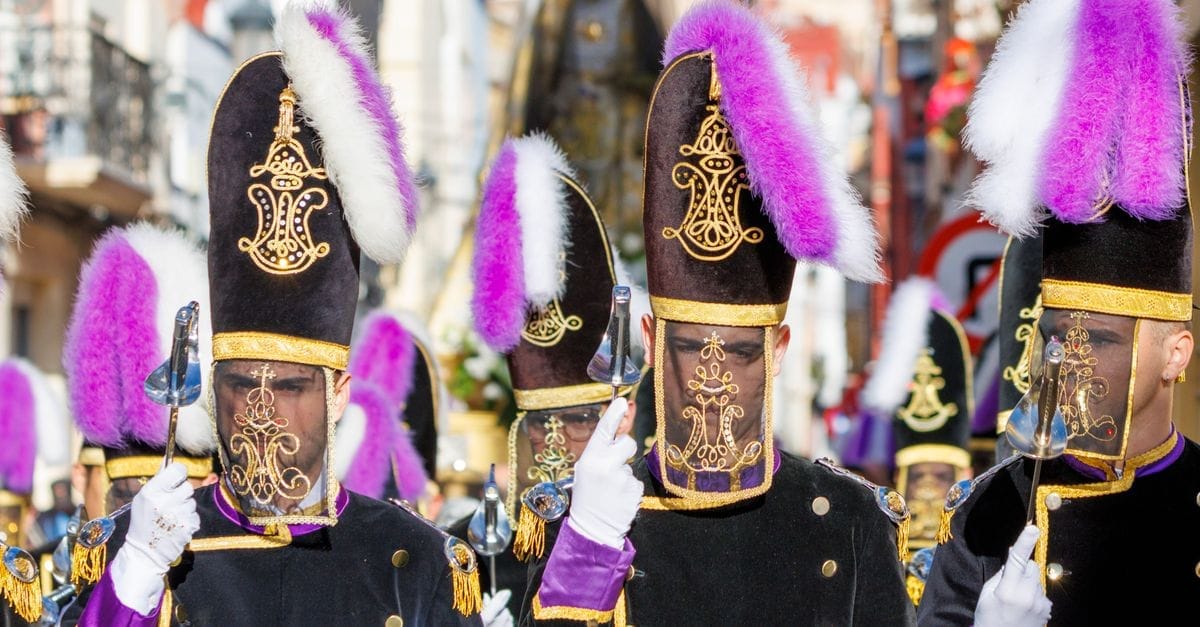
Back home, a parade is a rare thing you circle in the diary. In Valencia it's almost a way of life. You turn a corner and walk straight into a banda - a brass band - drums pounding, costumes blazing. Surprised at first, the newcomer soon finds themselves watching for the next procession like an excited child.
The land of the bandas
The Valencian Community is the heartland of the banda, the community brass and wind band. The regional federation brings together around 550 music societies, more than 1,100 bands and over 40,000 musicians - more than half of all the bands in Spain. These societies are even listed as intangible cultural heritage. The moving part? They're amateurs - neighbours, children trained at the local music school - and yet the standard is superb. Every village, every barrio has its band, and it accompanies absolutely every fiesta.
Processions for every season
The Valencian calendar overflows with tradition, and much of it is lived out in the street:
- La Semana Santa Marinera: the Holy Week of the seafaring districts (El Cabanyal, El Grau), unique in Spain with its biblical characters and its armaos (Roman soldiers). It's classed as a fiesta of international tourist interest.
- Corpus Christi: the city's oldest festival, with its gegants and cabuts (giants and big-heads), its Rocas (monumental floats) and the mysterious Moma.
- Las Fallas (March): the grand climax. The despertà wake-up call to the sound of bands and firecrackers, the cavalcades, and above all the ofrenda de flores, the offering of flowers to the Mare de Déu dels Desemparats: a river of traditional costume flowing for two days.
- El Nou d'Octubre: the civic procession of the Valencian Community, the historic Reial Senyera banner carried through the streets.
Moros y Cristianos, the most spectacular parade
It's impossible to stay unmoved by the Moros y Cristianos (Moors and Christians): lavish parades re-enacting the medieval reconquest, with sumptuous costumes, floats, horses and pasodobles played by the bands. In Valencia and across the region - Alcoy above all, about an hour's drive away, where the fiesta is internationally classified - it's a festival of colour and music that leaves first-time onlookers open-mouthed.
And the magic of the Three Kings
On 5 January, forget Father Christmas: here it's the Reyes Magos (the Three Kings) who make children's eyes shine. The Cabalgata de los Reyes sweeps through the streets - illuminated floats, music and a rain of sweets thrown to the crowd. The Kings arrive in majesty, often by sea in Valencia, and the next morning children open their presents. If you're used to gifts on 25 December, the shift to the night of 5 January is a lovely thing to witness with children of your own.
Why it moves us so much
What strikes the newcomer is the sheer frequency, and the naturalness of it all. The religious, the civic and the popular blend together without any self-consciousness. Children parade in costume, grandparents applaud from the balcony, the band sets the tempo. You're not watching a show: you're part of the party. And very quickly you catch yourself checking the calendar so as not to miss a single procession.
Upcoming parades not to miss
Here are the big fixtures ahead (for movable feasts, confirm the exact date on the official events calendar):
- 26 July 2026: the Batalla de Flores, the flower-battle finale of the Gran Fira de Julio, on the Paseo de la Alameda.
- 9 October 2026: the Nou d'Octubre, the civic procession for Valencian Community Day.
- 5 January 2027: the Cabalgata de los Reyes Magos, the great Three Kings parade.
- 15 to 19 March 2027: Las Fallas, with the mascletàs, the ofrenda de flores and the cavalcades (the daily mascletàs begin on 1 March).
- Late March 2027 (Holy Week): the Semana Santa Marinera, in the maritime districts.
- April 2027: the Moros y Cristianos, spectacular above all in Alcoy, an hour from Valencia.
- June 2027: Corpus Christi, with its gegants, its Rocas and the Moma.
Sources
- Federation of Music Societies of the Valencian Community (FSMCV)
- Ministry of Culture: music societies as intangible heritage
- Visit Valencia: Valencia's fiestas and traditions
Le Livre blanc 2026 de l'expat à Valencia
NIE, empadronamiento, fiscalité, école, logement : tout l'essentiel pour s'installer, réuni dans un guide PDF. Laisse ton e-mail, on te l'envoie.
🎉 Et voilà ! Ton Livre blanc 2026 de l'expat s'ouvre ici :
Ouvrir le Livre blanc 2026Dernière étape pour rejoindre l'aventure : confirme ton inscription dans l'e-mail qu'on vient de t'envoyer.
Réagis à cet article