
Who is Sandra, the creator behind @olestra64 helping French speakers through Spanish red tape?
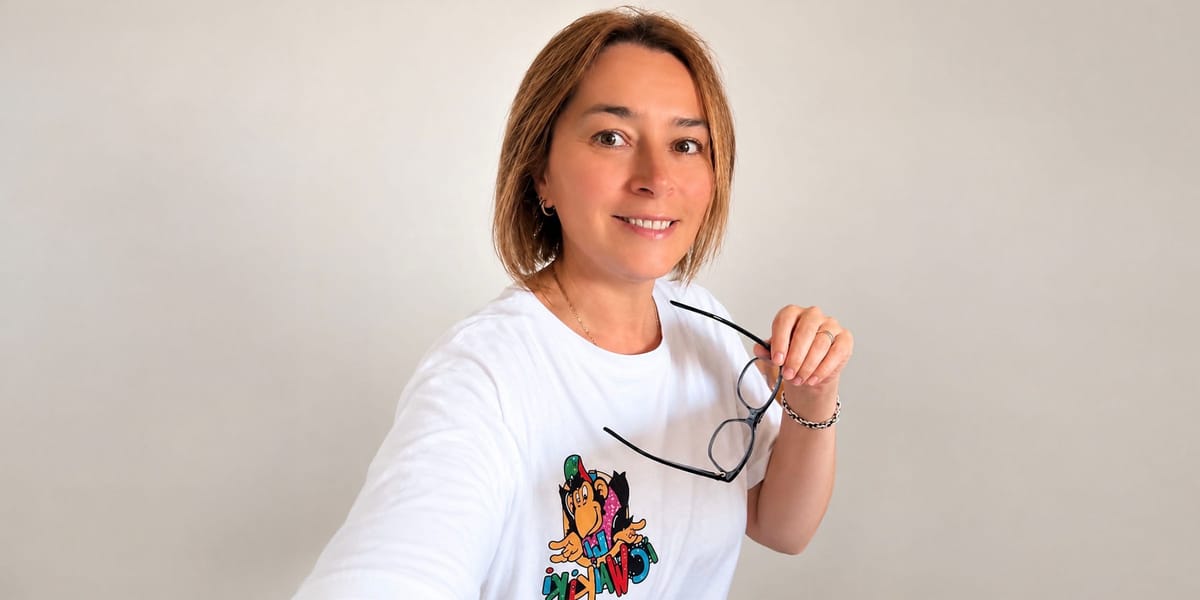
Sandra is French-Andalusian. Born in Bayonne, in the French Basque Country, she now lives in La Línea de la Concepción, at the very southern tip of Andalusia, a stone's throw from Gibraltar. On TikTok, as @olestra64, she shares everyday life in Spain, untangles the country's administrative procedures and explains how Spanish rules actually work. Her day job is something else entirely: she is a qualified insurance agent in Spain who advises French speakers on their policies. This is the portrait of a content creator for whom passing on what she knows has always been the common thread, and whose motto says it all: "Here, we move forward together!"
Who is behind the TikTok account @olestra64?
On @olestra64, Sandra talks the way she does in real life: straight-talking, funny and spontaneous. She posts about her daily life in Spain, breaks down the paperwork and explains Spanish rules to anyone who feels lost. Her aim is simple: information that is clear, accessible and genuinely useful to everyone.
The instinct goes back long before her current projects. "I've always loved passing on what I know, explaining things simply and helping people see more clearly," she says. Her method is to keep things simple without cutting corners on accuracy. Where it matters, she separates national rules from local practice: "I'd rather give reliable information than a trick that might stop working tomorrow!" That is why you won't see her sharing the so-called "miracle" times for landing a NIE appointment; instead, she advises checking the official portal regularly.
Where does her French-Andalusian heritage come from?
From her family. Her mother is Andalusian, from La Línea de la Concepción, and her father is Basque. Sandra grew up between the two cultures and remains deeply attached to both. "Andalusia has always been part of my life. It isn't just a region I chose to move to as an adult. It's my roots, my childhood, my family and a big part of my memories."
Ever since she was a baby, she has been coming to La Línea to see her grandparents and cousins, usually twice a year and sometimes for several months at a time, driving down from France. The trip there was a celebration. The trip home, far less so: "I cried every single time. I never wanted to leave!" Deep down, she had always dreamed of living here.
Why did she move to Spain?
In France, Sandra was a civil servant. When her husband retired from the military, the couple decided the time had come: she left her job, they packed their bags and moved down together. Their son stayed in France.
Arriving in La Línea felt like coming home. She already knew the streets, the routines and the atmosphere, and part of her family lives there. What struck her most: "This time I hadn't just come for a holiday. I didn't have to count down the days until I left anymore!" Her husband, too, "was absolutely happy here". She worked in insurance, kept up her training, and the couple found their balance.
What is her actual job?
Insurance. In her own words, it is "my real job". Sandra is a qualified insurance agent in Spain and trains regularly, "because regulations are constantly changing". Through Sandra Assurance Espagne, she helps French speakers with health, home and funeral insurance, tailoring her advice to each person's situation.
Her professional eye shows as soon as residency comes up. To obtain the EU citizen registration certificate, the famous "green card" (the route for EU nationals such as her French followers), someone who is not working must, among other things, prove they have comprehensive health cover in Spain. And Sandra is adamant: not every private policy meets the residency requirements. You have to look closely at the scope of cover, the exclusions and the conditions for claims. "You shouldn't choose an insurance policy just because it's the cheapest."
Both of her activities come down to the same goal: "helping French speakers live in Spain with more peace of mind, by understanding their paperwork and their insurance contracts".
Why did she create MiRuta España?
On 2 October 2025, Sandra's life was turned upside down. Her husband died suddenly of a heart attack while exercising. "It was an immense shock, something nothing had prepared us for."
After taking some time for herself, she felt the need to throw herself into work and keep her mind busy. So she decided to go much further than what she was already doing on social media. She was seeing too many people who were lost, with no idea where to start or who to turn to. "At first, this project was also a way for me to keep going through an extremely difficult time. Today, it's something I pour an enormous amount of energy and heart into."
MiRuta España officially launched in September 2026, after almost three months of non-stop work, "at 200%". The goal was not "yet another guide to Spain" but a genuinely practical tool. And she runs it single-handedly: research, fact-checking, writing the content, building the roadmaps and developing the website. "There's no big team or company with several departments behind MiRuta España. There's just me, my experience, my knowledge and a lot of hard work!"
What does MiRuta España offer?
Roadmaps tailored to each profile: retirees, working people and students. They show you where to start, which documents to prepare, who to contact and in what order to move forward. Sandra doesn't do the paperwork for you: she gives you the tools to understand it and handle it yourself, at your own pace. "My goal, above all, is to make people independent." She also wants to show that you don't necessarily have to spend a fortune on paid support to make a success of your move. The website: mirutaespana.com.
What does she enjoy most about her work?
"Quite simply, when people say thank you!" The messages she receives move her enormously. "When someone writes to me, 'Sandra, thank you, thanks to you I managed to do all my paperwork!', honestly, that's a huge satisfaction." At the time of the Democratic Memory Law (Ley de Memoria Democrática), she guided several people through their applications step by step, and a number of them came back to thank her once they had obtained Spanish nationality. "A simple thank you honestly means a great deal to me."
How should you prepare your paperwork? Her six tips
Sandra's first rule: "there's no magic order that works for everyone". A retiree, an employee, a self-employed person and a student won't necessarily follow the same path. So her tips aren't a sequence to follow to the letter, but a list of things to check.
First, for her, the essentials start before you even leave home (France, in the case of her followers). Check your budget, your tax situation and your health cover, get your documents ready and plan your housing ahead. Our guide to the documents to prepare before moving to Spain will help you sort through it all.
Second, identify your profile. Retiree, employee, self-employed or student: the supporting documents and the order of the steps vary from one case to the next.
Third, once in Spain, organise the formalities around your situation: your address and empadronamiento (registering with the town hall), the NIE, residency, social security, a bank account and healthcare. Some can run in parallel; others require you to have another document in hand first.
Fourth, before paying for a translation or an apostille, check what the receiving authority actually requires. An EU regulation exempts several categories of public documents exchanged between member states from the apostille, such as certain civil status records. "That saves a lot of unnecessary expense!"
Fifth, choose health insurance that genuinely meets the residency requirements, not just the cheapest one.
Sixth, if you keep income or assets in France, see an asesor fiscal (tax adviser) who knows Franco-Spanish situations well, before you move. "A tax mistake can cost far more than a consultation beforehand!" Our guide to declaring foreign income in Spain covers the basics.
The trouble, as she sees it, is that many people start by applying for their NIE without really looking at what comes next, then discover at the last minute that they are missing suitable insurance, proof of sufficient means or a French document. As for timescales, she refuses to make promises: there is no way to guarantee a complete administrative set-up within two weeks or a month. It all depends on available appointments and on each person's situation.
Which misconceptions does she most want to correct?
Without hesitation, this one: "I'm French, so I can come and live in Spain without any formalities!" Yes, EU citizens can move to and settle in another member state, under the conditions set by EU law. But that doesn't mean there is nothing to do. Sandra sums it up in three sentences: "A NIE is not residency. An empadronamiento is not health cover. And administrative residency isn't the same thing as tax residency!"
In her view, the most common NIE mistake is believing that once you have it, you are automatically a Spanish resident. The same logic applies to healthcare: having a NIE, being registered on the padrón or holding the green certificate does not automatically entitle you to public healthcare. And she adds, with a smile: "Just because there's sun, sea and tapas doesn't mean there's no more paperwork!"
Valencia, Alicante, Costa Brava: where do French speakers want to settle?
In the messages she receives, Sandra sees huge interest in Alicante, Valencia and the Costa Brava, whether for retirement or a fresh start. So much so that it makes her smile: "Some people almost give me the impression that if you don't live in those areas, you don't really live in Spain!" She points out that Spain is rich and varies enormously from one region to the next, and that life in Andalusia is wonderful too. If you're torn between the two cities on the Valencian coast, our comparison Valencia or Alicante: where should you live in 2026? can help.
What strikes her most is how many people want to take the plunge without always realising how much paperwork it involves. Hence, for her, the importance of doing your homework before you go.
What advice does she give to anyone still on the fence?
"I always say you only live once!" If the desire is there, go for it, rather than spending years wondering what might have been. And if it doesn't work out as planned, at least you will have tried. But taking the leap doesn't mean leaving on a whim: "Prepare your move carefully, but above all, don't let fear stop you from living your dream."
Where can you follow Sandra?
- TikTok: @olestra64
- Instagram: @oles_tra64
- Roadmaps: MiRuta España
- Insurance: Sandra Assurance Espagne
Frequently asked questions
Who is @olestra64 on TikTok?
It's the account of Sandra, a French-Andalusian content creator based in La Línea de la Concepción, in Andalusia. She shares her life in Spain there and explains administrative procedures in plain terms for French speakers.
What is MiRuta España?
A website, mirutaespana.com, launched by Sandra in September 2026. It offers roadmaps by profile (retirees, working people, students) to help you prepare your move to Spain and handle the paperwork yourself.
Will Sandra do the paperwork for me?
No. Through MiRuta España, she gives you the tools to understand your paperwork and complete it on your own, without necessarily paying for costly support.
Is Sandra an insurance agent?
Yes, it's her main profession. She is a qualified insurance agent in Spain and advises French speakers on health, home and funeral insurance.
Is a NIE enough to become a resident in Spain?
No. The NIE is an identification number for foreigners, not a residence card. To live in Spain for more than three months, an EU citizen applies for the registration certificate, known as the "green card".
In what order should you tackle the paperwork when you arrive in Spain?
There's no universal order. Sandra recommends starting before you leave France (budget, tax, health, documents, housing), then, once in Spain, organising empadronamiento, the NIE, residency, social security, banking and healthcare according to your situation.
Sources: written interview with Sandra, creator of the TikTok account @olestra64, founder of MiRuta España and insurance agent in Spain, October 2026 (answers given in French and translated by our newsroom).
Suis-nous sur Instagram : @thedailyvalencia
Le Livre blanc 2026 de l'expat à Valencia
NIE, empadronamiento, fiscalité, école, logement : tout l'essentiel pour s'installer, réuni dans un guide PDF. Laisse ton e-mail, on te l'envoie.
🎉 Et voilà ! Ton Livre blanc 2026 de l'expat s'ouvre ici :
Ouvrir le Livre blanc 2026Dernière étape pour rejoindre l'aventure : confirme ton inscription dans l'e-mail qu'on vient de t'envoyer.
Réagis à cet article