
Spain's New Traffic Rules: What Changes 1 October 2026?
From 1 October 2026, Spain's traffic code changes significantly. A royal decree (Real Decreto 518/2026) approved by the Council of Ministers on 23 June 2026 amends the Reglamento General de Circulación: a new overtaking distance for cyclists, the end of several seatbelt exemptions, a minimum age and helmet rule for electric scooters, and compulsory gloves and closed shoes for motorcyclists. Two further requirements are delayed by a year, to 1 October 2027. The rules apply across the whole of Spain, including Valencia, Alicante and the Balearic Islands, with no regional exceptions, and to every driver on Spanish roads, resident or visitor, whatever their nationality.
What changes for overtaking cyclists?
Drivers overtaking a cyclist must now leave a lateral distance of at least 1.5 metres (roughly 5 feet), according to the official announcement from the Dirección General de Tráfico (DGT) on 23 June 2026. Where the road has more than one lane, the driver must move fully into another lane; simply "making room" within the same lane is no longer enough. Drivers must also cut their speed by at least 20 km/h (about 12 mph) below the posted limit for that road while completing the overtake.
Does the seatbelt rule change for everyone?
Yes, for almost everyone. The new regulation removes the exemptions that used to apply to taxi drivers, delivery riders and driving instructors, according to the DGT (23 June 2026). The only exemption that remains is for patients being transported in a medicalised ambulance.
What are the new rules for electric scooters (VMPs)?
The minimum age to ride a personal mobility vehicle (VMP), Spain's legal term for electric scooters, is set at 15, with a helmet now compulsory and a reflective vest required at night or in low visibility, according to the DGT (23 June 2026). The offence is classified as serious and carries a 200-euro fine, according to several specialist outlets including dvuelta.es (July 2026). A separate requirement for permanent, always-on lighting on these vehicles is delayed until 1 October 2027. Anyone renting a shared e-scooter for a short trip in Valencia, including through one of the city's dockless operators, should expect these rules to be enforced like any other traffic rule; see our guide to shared e-scooters and mopeds in Valencia for how the free-floating schemes work.
What changes for motorcyclists?
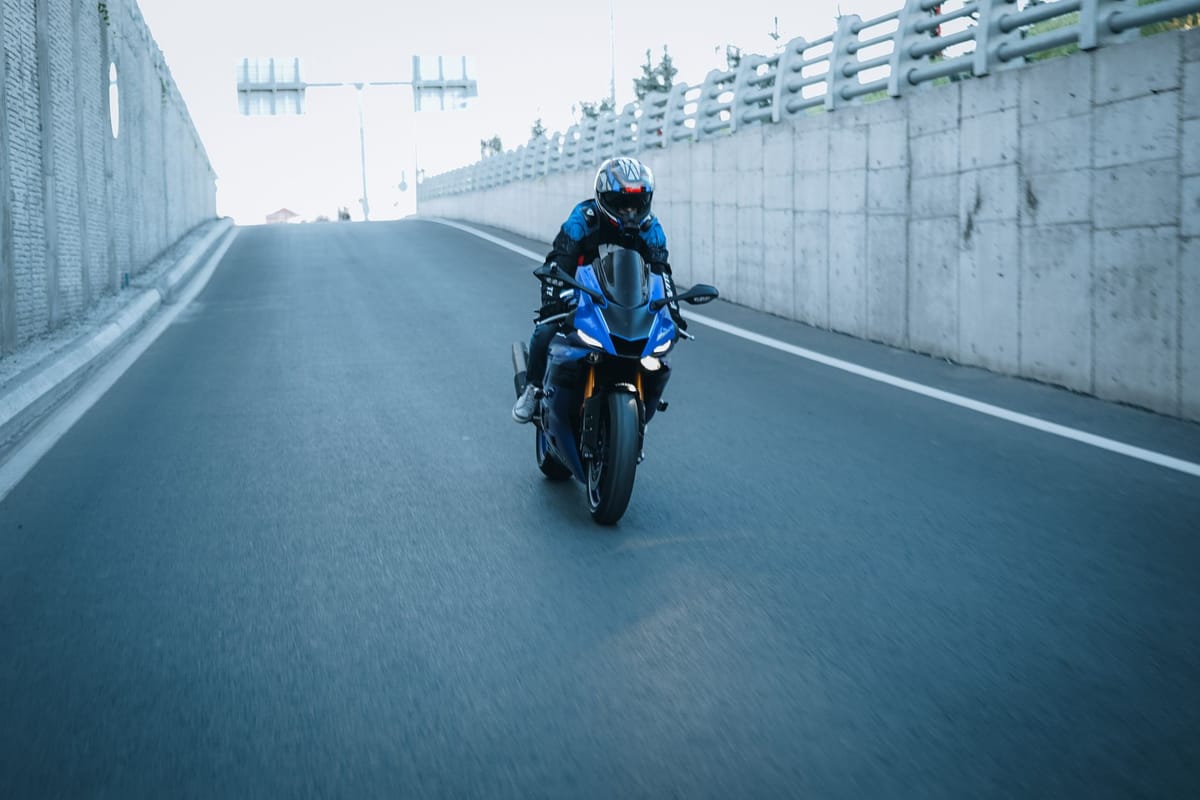
Approved gloves become compulsory on interurban roads (i.e. outside built-up areas), and closed shoes are now required on any type of road, including in town, according to the DGT (23 June 2026) and coches.net (2026). A separate requirement for a specifically homologated helmet, rather than simply a certified one, is delayed until 1 October 2027, on the same timeline as the scooter lighting rule.
How much do the new fines cost?
200 euros in most of the cases listed here (non-compliant overtaking, a motorcyclist without gloves or closed shoes, an e-scooter offence), according to the DGT and several specialist outlets. Some of them, including coches.net and dvuelta.es, also mention possible points deductions depending on the exact nature of the offence, but this points scale is not uniformly confirmed for every case at this stage: treat it as unresolved between sources rather than settled. A 50% reduction applies if the fine is paid within 20 days of notification, according to dvuelta.es (July 2026).
Why are some measures delayed until 2027?
The royal decree was approved by the Council of Ministers on 23 June 2026, but it comes into force in two stages, according to the DGT (23 June 2026). Most of the measures, cyclist overtaking, the seatbelt changes, e-scooter rules, and gloves and shoes for motorcyclists, apply from 1 October 2026. Two more technical requirements, permanent lighting on e-scooters and a specifically homologated motorcycle helmet, are pushed back to 1 October 2027 to give manufacturers and riders time to adapt. Anyone planning to drive long-term in Spain, including exchanging a foreign licence, should check our guide to exchanging a driving licence in Spain, since that process runs on entirely separate rules and deadlines from this reform.
Does this apply in Valencia, Alicante and the Balearics?
Yes. The Reglamento General de Circulación is a national regulation, applied in exactly the same way across Spain, with no local exception for the Valencian Community or the Balearic Islands. The change is particularly relevant for two groups: users of the free-floating e-scooters that are common in central Valencia, and cyclists on the region's greenways. It also matters to the large British and Irish community living along the Costa Blanca, many of whom drive hire cars or their own vehicles on the same roads as local traffic, and to anyone driving a rental car around the Balearics over summer. See our guide to driving a car in Valencia for the wider picture on licences, registration and low-emission zones.
| Rule | Until 30 September 2026 | From 1 October 2026 |
|---|---|---|
| Overtaking a cyclist | Recommended lateral gap, no compulsory lane change | 1.5 m (5 ft) compulsory, full lane change, speed cut by at least 20 km/h (12 mph) |
| Seatbelt (taxi, delivery, driving school) | Exemption possible in some cases | Compulsory with no exception (except medicalised ambulance) |
| Electric scooter (VMP) | No national minimum age or helmet rule | Minimum age 15, helmet compulsory, reflective vest at night |
| Motorcyclist: gloves and shoes | Not compulsory | Approved gloves (interurban roads) and closed shoes (all roads) compulsory |
| Homologated motorcycle helmet / permanent scooter lighting | Not applicable | Delayed to 1 October 2027 |
Frequently asked questions
Does this affect foreign tourists driving in Spain?
Yes. The Reglamento General de Circulación applies to every driver on Spanish roads, resident or visiting, whatever their nationality, including tourists driving hire cars.
Do motorcyclists need gloves before 1 October 2026?
No, the requirement only takes effect on 1 October 2026. Current rules apply until then.
Does this make helmets compulsory for cyclists in town?
No. The new regulation does not make helmets compulsory for cyclists in urban areas; the new helmet requirements concern electric scooters (VMPs), from age 15.
What happens if you break one of these rules after 1 October 2026?
A 200-euro fine in most of the cases covered here, cut by 50% for early payment within 20 days. Whether points are also deducted depends on the exact offence and is not uniformly confirmed at this stage.
Is this the same rule across all of Spain, including the Balearics?
Yes. It is a national regulation with no regional variation, so it applies identically in Valencia, Alicante, the rest of the Costa Blanca and the Balearic Islands.
Sources
- DGT (Dirección General de Tráfico, dgt.es), official announcement, 23 June 2026
- coches.net, 2026
- dvuelta.es, July 2026
- motor16.com, 2026
Information verified on 27 July 2026. Some penalty details, in particular the points deduction, vary between sources and remain to be confirmed offence by offence on the DGT's official channels. This article was prepared with the help of AI, then checked, verified and edited by our human editorial team, who take full responsibility for it.
Le Livre blanc 2026 de l'expat à Valencia
NIE, empadronamiento, fiscalité, école, logement : tout l'essentiel pour s'installer, réuni dans un guide PDF. Laisse ton e-mail, on te l'envoie.
🎉 Et voilà ! Ton Livre blanc 2026 de l'expat s'ouvre ici :
Ouvrir le Livre blanc 2026Dernière étape pour rejoindre l'aventure : confirme ton inscription dans l'e-mail qu'on vient de t'envoyer.
Réagis à cet article