
Amélia, from Erasmus in Valencia to a master's in Madrid: two and a half years in Spain
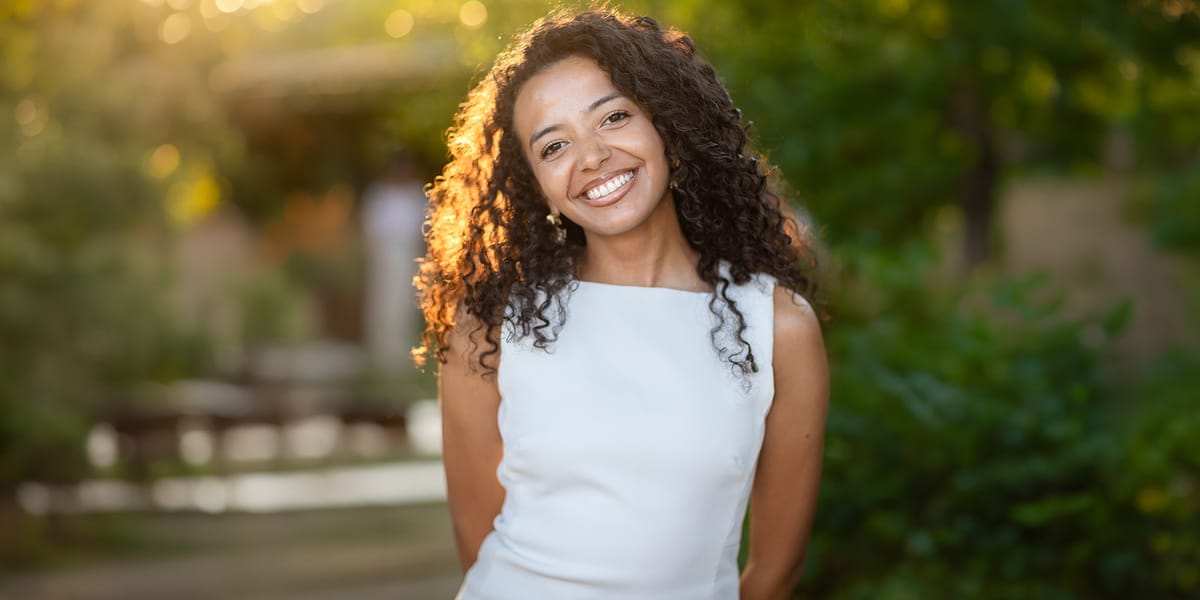
Erasmus in Valencia, an internship in the same city, then a master's in Madrid: Amélia, 25, spent two and a half years in Spain before returning to work in Paris. Student budgets, finding a flatshare, expressions that make all the difference, culture shocks: she shares what she wishes she had known before leaving, and why she would do it all exactly the same way again.
Who is Amélia Kouekam?
Amélia is a graduate of ESCP Business School, where she completed an MSc in digital marketing at its Madrid campus. Since September 2024, she has lived in Paris and worked at Juliette has a gun, a niche fragrance brand founded by Romano Ricci, the great-grandson of Nina Ricci. She is part of its social media, influencer marketing and partnerships team.
Her connection with Spain began in 2020, with an Erasmus exchange at Universidad Católica de Valencia during her bachelor's degree in international management at Université catholique de Lille. She returned to Valencia in spring 2022 for a five-month digital marketing internship at a real estate agency, then moved to Madrid for her master's, from September 2022 to July 2023.
Why did she choose Spain?
“I wanted to live abroad, discover another culture, improve my Spanish and become more independent,” she explains. She arrived in Valencia with B2 Spanish. Classes in Spanish and conversations with local students helped her reach C1.
After the first year of a master's at KEDGE Business School in Bordeaux, she wanted to specialise in digital marketing while staying within the French business school system. She chose ESCP and its Madrid campus, in a city she had never visited. She arrived a little before the start of term, took a week of Spanish classes with some of her future classmates, and even filmed her move from Valencia to Madrid for her YouTube channel.
How did her internship in Valencia go?
Amélia found her internship through LinkedIn and Welcome to the Jungle. What appealed to her was the real estate sector, the company's social media presence and the chance to work in a French-speaking team while living in Spain. The internship, from April to September 2022, was arranged through a placement agreement with her school, KEDGE.
As a marketing assistant, she managed social media across five platforms, tracked weekly metrics (engagement, clicks, opens), contributed to the monthly newsletter, created visuals for advertising campaigns and produced plenty of short videos. “I really enjoyed the working atmosphere and the variety of tasks,” she says. She is careful not to generalise about differences between internships in Spain and France, but describes it as “a practical insight into working for a company based abroad”.
On a personal level, the internship built on what Erasmus had started: “being independent, adapting to a new environment and gaining confidence in my ability to manage far from home”.
Valencia or Madrid: how does everyday life differ?
Valencia won her over with its mild climate, relaxed pace of life and friendly residents. “It's a city full of charm, which felt authentic to me and less affected by overtourism at the time,” she recalls. The cost of living was fairly low. It was also where she made the most Spanish friends, thanks to language classes and close contact with local students. For help deciding where to live, see our guide to 8 neighbourhoods in Valencia.
In Madrid, she shared a flat in Lavapiés. The capital is bigger and more international, with far more bars, restaurants and things to do. “Madrid felt very lively, with opportunities to go out almost every day.” However, she found it harder to become part of Spanish friendship groups there: many people had known each other since childhood and went home to their families at weekends. “That's a personal impression, of course, not a general rule,” she points out. The city's international character does, however, make it easy to meet people from all over the world.
Her verdict: “Valencia is ideal for enjoying a more peaceful daily life, while Madrid offers more energy and opportunities to discover new things.”
What is a master's at ESCP Madrid like?
Around fifteen hours of classes a week, but plenty of group projects. The curriculum covers brand building, branded content, social media and advertising creative, with a specialisation in fashion and luxury. Students work on real briefs for major brands and also develop technical skills: analytics, search engine optimisation, Google Ads and website creation. Outside class, Amélia made the most of the city: bars, restaurants, shopping and day trips.
How much should you budget to study in Madrid?
During her master's, Amélia paid around €500 a month for a room in a shared flat. She spent about €20 a week on groceries at Mercadona, and her youth metro pass cost around €8 a month. She found life much more affordable than in Paris or Bordeaux. As she points out herself, these figures date from 2022-2023 and may have changed.
Her tips for staying within budget:
- First, buy your groceries at the supermarket.
- Second, set a monthly budget for going out.
- Third, look into student discounts and public transport passes.
How can you find student accommodation in Spain?
Amélia found her Madrid flatshare on Idealista through an agency, without even viewing the flat. Her application went through without any problems. Looking back, here is her advice:
- First, start looking well in advance.
- Second, check the accommodation details and contract terms carefully.
- Third, ask all your questions about bills, the security deposit and any additional fees.
- Fourth, view the property, or ask for a video viewing, before committing.
If you do not have Spanish payslips, see also our guide to renting in Valencia without Spanish payslips.
Why did she film her everyday life?
During her years in Spain, Amélia posted videos about everyday life: grocery shopping, going out, attitudes towards money, and how Spanish addresses work, with piso, planta and puerta. It was a way to document that period, practise Spanish on camera and, above all, help others: “I also wanted to help future Erasmus students picture themselves there and get a clearer idea of what everyday life would actually be like.”
Which Spanish expressions should you know before arriving?
What she wishes she had known before leaving were, above all, the everyday expressions essential for keeping up with conversations. Not to mention pronunciation in Spain, which distinguishes certain sounds of “c”, “z” and “s”.
- “buenas” to say hello, “porfa” for “please”, “tío” and “tía” to address a friend;
- “¡qué guay!” when something is great, “molar” when you like something, “estoy flipando” to express surprise;
- “quedar” to arrange to meet, “tomar algo” to go for a drink, “me toca” to say it is your turn;
- “o sea” and “en plan”, which crop up constantly in conversation.
Vocabulary matters at mealtimes too: el desayuno (breakfast), el almuerzo (a morning meal or snack, depending on the region), la comida (lunch), la merienda (an afternoon snack) and la cena (dinner). And at the bar, “una caña”, “un doble” and “una pinta” do not necessarily mean the same amount of beer.
Which cultural differences stood out to her?
First, the daily schedule: lunch and dinner are later, people go out a lot in the evenings, and shops often stay open late. Then there is the more informal way people speak to one another: they readily use informal forms of address and express themselves spontaneously, without this being disrespectful. She also noticed that her Spanish friends were happy to go out during the week and tended to keep weekends for family. For the etiquette to know when visiting someone's home, see our guide to invitations to Spanish homes and sobremesa.
“My little culture shock at first was mainly how quickly Spanish people speak!” Even with a good level of Spanish, some conversations remain a challenge. But she found that people appreciated her efforts to speak their language, even when she struggled to find the right words: “That encouraged me to practise and build my confidence.”
How did Spain change her?
“Enormously,” Amélia replies. Away from her family, she learnt to find her own solutions, make decisions and avoid relying on others. “I know I can arrive in a new city, develop new habits and build a routine from scratch.” One conviction has stayed with her: “you don't need to have planned everything before taking the plunge: you also learn a lot as you go”.
The experience also sharpened her curiosity about other cultures: understanding the country's history and traditions, and looking beyond the clichés by discovering Spain from within. Her only regret is that she speaks much less Spanish since returning to France. She follows many Spanish creators on social media to stay connected to the language.
Would she return one day? “Yes, why not!” Madrid remains the city she feels most attached to. She could see herself moving there for a great career opportunity, or later on with a family. And if she had to do it all again, she would do everything exactly the same way: “Each stage gave me something different, and I don't regret the choices I made.”
What advice does she give students who are unsure about going to Spain?
- First, take the plunge, even if you do not feel completely ready.
- Second, make every effort to integrate and avoid socialising only with other French people: meeting locals is how you really make progress.
- Third, work on your Spanish before and during your stay.
- Fourth, manage your budget carefully and research the city beforehand.
- Fifth, speak to people who have already lived there or attended your chosen university.
“Ultimately, I'd say you shouldn't wait for everything to be perfect before taking the plunge,” she concludes.
Practical information
- Her path: Erasmus at Universidad Católica de Valencia (2020-2021), a digital marketing internship in Valencia (April to September 2022), an MSc in digital marketing at ESCP Madrid (2022-2023).
- Her Madrid budget at the time: around €500 a month in rent for a room in a shared flat, €20 a week for groceries and €8 a month for a youth metro pass. These prices may have changed.
- Her accommodation: a shared flat in Lavapiés, found on Idealista through an agency.
- Her Spanish level: B2 on arrival, C1 by the end of her Erasmus exchange.
Frequently asked questions
Who is Amélia Kouekam?
Amélia is a graduate of ESCP Business School. She lived in Spain for two and a half years, completing an Erasmus exchange and an internship in Valencia, followed by a master's in Madrid. She now works in Paris in social media, influencer marketing and partnerships for a niche fragrance brand.
How much does student life in Madrid cost?
During her master's in 2022-2023, Amélia paid around €500 a month in rent for a room in a shared flat, €20 a week for groceries and about €8 a month for a youth metro pass. These prices may have changed since then.
How can you find student accommodation in Spain?
Amélia found her flatshare on Idealista through an agency. She recommends starting early, checking the contract, bills and security deposit, and viewing the property or requesting a video viewing before committing.
Should you study in Valencia or Madrid?
For Amélia, Valencia offers a quieter daily life, a mild climate and a lower cost of living, and it is easier to make Spanish friends there. Madrid is bigger, more international and livelier. The two experiences complement each other.
Which Spanish expressions should you learn before leaving?
Everyday expressions: “buenas” to say hello, “porfa” for “please”, “quedar” to arrange to meet, “tomar algo” to go for a drink, “¡qué guay!” when something is great. It also helps to know the names of meals, from desayuno to cena.
What advice would she give a student who is unsure about going to Spain?
Take the plunge without waiting for everything to be perfect, get to know locals instead of staying within French circles, and work on your Spanish before and during your stay.
About Amélia
Amélia is a graduate of ESCP Business School, where she completed an MSc in digital marketing at its Madrid campus. After an Erasmus exchange in Valencia and a digital marketing internship at a real estate agency, she continued her time in Spain with a year of specialised study at ESCP Madrid, bringing her total experience in the country to two and a half years. This period helped her refine her Spanish, become more independent and open up to another culture. Since September 2024, she has worked in Paris at Juliette has a gun, a French niche fragrance brand, as part of the social media, influencer marketing and partnerships team. Still attached to Madrid, she remains open to future career opportunities abroad.
Follow her on: LinkedIn (professional background), TikTok (culture and life in Spain), Instagram (lifestyle), YouTube (vlogs in Spanish).
Suis-nous sur Instagram : @thedailyvalencia
Le Livre blanc 2026 de l'expat à Valencia
NIE, empadronamiento, fiscalité, école, logement : tout l'essentiel pour s'installer, réuni dans un guide PDF. Laisse ton e-mail, on te l'envoie.
🎉 Et voilà ! Ton Livre blanc 2026 de l'expat s'ouvre ici :
Ouvrir le Livre blanc 2026Dernière étape pour rejoindre l'aventure : confirme ton inscription dans l'e-mail qu'on vient de t'envoyer.
Réagis à cet article