
The 9th of October and the Mocadorà: the Valencians' big day (and their Valentine's)
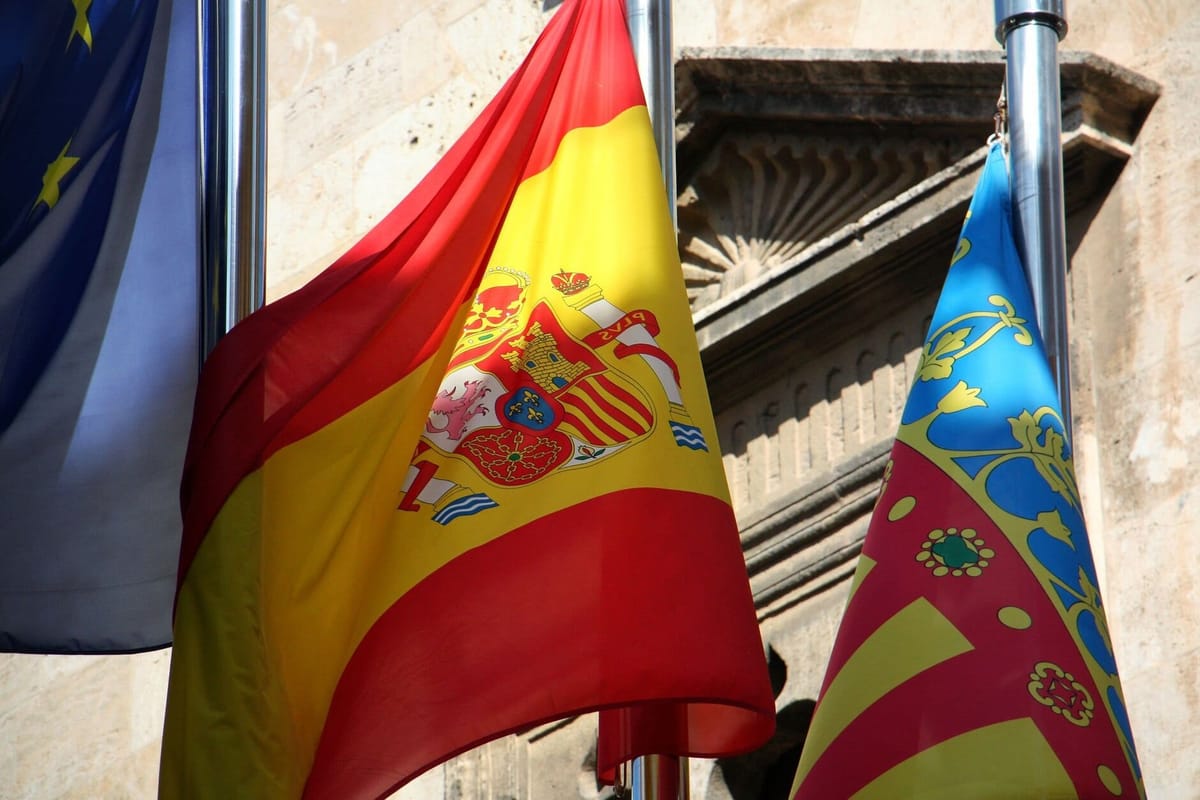
9 October 2026 falls on a Friday and is a public holiday across the whole Valencian Community (the provinces of Valencia, Alicante and Castellón), under the Generalitat's Decreto 100/2025. It is the 9 d'Octubre, Valencian Community Day, which marks King Jaume I's entry into the city of València on 9 October 1238. The highlight is the Processó Cívica with the Real Senyera, leaving the Plaza del Ayuntamiento at 12:00 noon, followed by a mascletà at around 2pm, according to the Ajuntament de València.
Updated on 4 October 2026. We have added the official 2026 programme (source: valencia.es, checked on 4 October). As of 4 October, the city had not yet published its road closures, the EMT bus and Metrovalencia timetables or a list of shops and supermarkets open on 9 October. These usually appear on valencia.es a day or two before the holiday (expected around 7 or 8 October): we will add them here as soon as they are out.
If you have just moved here, this is the day the city wears its identity on its sleeve: a centuries-old ceremony in the morning, gunpowder at lunchtime and, in every bakery window, a love token made of marzipan. Here is what you need to know to enjoy it like a local.
What is celebrated on 9 October in Valencia?
The holiday remembers the day King Jaume I (James I of Aragon) rode into València on 9 October 1238, the founding moment of the old Kingdom of Valencia. The city's surrender had been signed a few days earlier, on 28 September 1238, by the emir Zayyan ibn Mardanish (sources: eldiario.es, 9 October 2025; Wikipedia ES). The first procession to commemorate the conquest took place in 1338, for its 100th anniversary.
Why 2026 is special, in one sentence: Jaume I died in 1276, so this year marks 750 years since his death. To mark it, the Real Senyera will parade together with the king's own sword, and the two are on display side by side at the city hall from 6 to 8 October (sources: valencia.es; valencianews.es and hellovalencia.es, September 2026).
9 October is also Sant Donís (Saint Denis) in the calendar, which Valencians celebrate as their own Valentine's Day. More on that below.
Is 9 October 2026 a public holiday? What about 12 October?
Yes, Friday 9 October 2026 is a public holiday throughout the Valencian Community, not just in the city: Alicante, Elche, Benidorm, Castelló and every other town in the region close for the day. The legal basis is Decreto 100/2025, published in the regional gazette (DOGV no. 10145, 7 July 2025, CVE DOGV-C-2025-24690), which sets the 12 public holidays for 2026: 1 and 6 January, 19 March, 3 and 6 April, 1 May, 24 June, 15 August, 9 October, 12 October, 8 and 25 December.
Monday 12 October 2026 is a holiday too: it is Spain's national day. That gives you a four-day weekend, from Friday 9 to Monday 12 October, without taking a single day off. One catch if you are planning with friends elsewhere in Spain: 9 October is not a national holiday. Outside the region, it is a normal working Friday.
| Date | Day | Status in 2026 |
|---|---|---|
| 9 October 2026 | Friday | Regional holiday across the Valencian Community (Valencian Community Day) |
| 10 and 11 October 2026 | Saturday and Sunday | Weekend |
| 12 October 2026 | Monday | National holiday across Spain (Fiesta Nacional) |
A bit of background on the name: the date was first proclaimed "Día Nacional del País Valenciano" in 1976 by political parties and trade unions, and became the official Día de la Comunitat Valenciana with the 1982 Statute of Autonomy (Organic Law 5/1982 of 1 July, BOE-A-1982-17235). Sources: Wikipedia ES; eldiario.es; consolidated text of the Statute on boe.es.
What is the 9 d'Octubre 2026 programme in Valencia?
This is the 2026 schedule published by the Ajuntament de València (city agenda "Festividad del 9 d'Octubre 2026" on valencia.es, checked on 4 October 2026, cross-checked with visitvalencia.com, valenciabonita.es and actualidadvalencia.com of 18 September 2026). Times can still change, so check valencia.es before heading out.
| Date | Time | Event | Where |
|---|---|---|---|
| Fri 2 Oct | 11:30am | Opening of the exhibition "La imatge del rei Jaume I" | Museu d'Història de València |
| Fri 2 Oct | 8pm | Entraeta Festera (Moros y Cristianos parade) | Starts at Plaça de la Mare de Déu |
| Sat 3 Oct | 11am to 8pm | Re-enactment of Jaume I's military camp | Parc Central |
| Sat 3 Oct | 5pm | Children's Moros y Cristianos parade | Starts at Plaça del Tossal |
| Sat 3 Oct | 8pm | Ambaixades (theatrical re-enactment) | Plaça dels Furs (Torres de Serrans) |
| Sun 4 Oct | 11:30am | Flower offering and parade | Cathedral, Plaza de la Reina, Plaza del Ayuntamiento |
| Tue 6 to Thu 8 Oct | 10am to 9pm (from 11am on the 6th) | Exhibition "La Nostra Senyera": the Real Senyera and Jaume I's sword | Saló de Cristall, city hall |
| Thu 8 Oct | 7pm, 7:30pm and 8pm | Cant a la Senyera (singing to the flag) | Saló de Cristall, city hall |
| Thu 8 Oct | 7:30pm | Valencian music and dance, then a public dansà at around 9pm | Plaza del Ayuntamiento |
| Thu 8 Oct | 11:30pm and 11:59pm | Fireworks | Pont de Montolivet (Monteolivete bridge) |
| Fri 9 Oct | 12:00 noon | Processó Cívica: the Real Senyera comes down from the balcony, Te Deum, offering to Jaume I | Plaza del Ayuntamiento, Cathedral, Parterre |
| Fri 9 Oct | around 2pm | Mascletà (fired by Hermanos Caballer, according to valencia.es) | Plaza del Ayuntamiento |
| Fri 9 Oct | 3:45pm | Baixada de Glòria | From the Plaza del Ayuntamiento |
| Fri 9 Oct | 5pm | 21st Entrada de Moros y Cristianos | Jardins de la Glorieta, calle de la Paz, Poeta Querol, calle de las Barcas, Plaza del Ayuntamiento, Marqués de Sotelo |
Where and when can you see the Real Senyera procession?
The Processó Cívica sets off on Friday 9 October 2026 at 12:00 noon from the Plaza del Ayuntamiento. The 2026 route announced by valenciabonita.es and actualidadvalencia.com (18 September 2026) runs along calle San Vicente and through the Plaza de la Reina to the Cathedral, where the procession enters by the Puerta de los Hierros for a Te Deum. It leaves via the Plaza del Palacio Arzobispal, loops back towards the Plaza de la Reina, follows calle de la Paz to the Plaza de Alfonso el Magnánimo (the Parterre), where flowers are laid at the statue of Jaume I, then heads back along calle Pintor Sorolla and calle de las Barcas.
In 2026 the flag is carried by city councillor José Gosálbez (Vox). The honour rotates between the groups on the city council: mayor María José Catalá in 2023, Papi Robles (Compromís) in 2024 and Borja Sanjuán (PSPV) in 2025 (source: valenciaextra.com, 30 September 2026).
Our tip: the moment everyone waits for is the flag coming down from the balcony, so if you want to watch it from the Plaza del Ayuntamiento, get there early. If the square is packed, calle San Vicente and the Plaza de la Reina are on the route and let you see the procession go by.
Why does the Senyera come down from the balcony?
The Real Senyera, the city's historic banner kept at the town hall, never leaves through the door. It is lowered from the balcony of the Ajuntament, held upright, because it must not bow before anything or anyone, not even a doorframe (sources: valenciaextra.com, 30 September 2026; lenciclopedia.org). The rule is said to go back to a royal privilege from the 14th century; sources disagree on the exact year, so we do not give one.
What time are the mascletà and the fireworks?
- Fireworks: on the eve, Thursday 8 October 2026 at 11:30pm and 11:59pm, at the Pont de Montolivet, according to valencia.es.
- Mascletà: Friday 9 October 2026 at around 2pm, Plaza del Ayuntamiento, fired by Hermanos Caballer according to valencia.es.
Never been to one? A mascletà is a daytime show of rhythmic explosions you feel in your chest more than you see. Our explainer covers it: what the mascletà is and why Valencia loves it.
What is open and closed on 9 October 2026 in Valencia?
Because 9 October is a public holiday, public offices are closed and most shops either close or switch to Sunday hours; bakeries and pastry shops stay open, since it is Mocadorà season (secondary source: valenciaexpatdaily.com, 21 September 2026).
As of 4 October 2026, nothing official had been published on which supermarkets will open, on road closures, or on EMT bus and Metrovalencia timetables for 9 October. For reference only: in 2024 the city closed the Pont de Montolivet on the evening before for the fireworks and shut access to the V-15 from 10:30pm to 1am (actualidadvalencia.com). The 2026 arrangements may differ. Keep an eye on valencia.es, emtvalencia.es and metrovalencia.es around 7 and 8 October; we will update this section as soon as the details are published.
What is a Mocadorà and how do you give one?
The Mocadorà: Valencia's Valentine's gift, in marzipan. On 9 October, you give the person you love a mocador, a scarf or handkerchief that is traditionally silk, tied in a bundle around small marzipan pieces shaped like the fruit and vegetables of the huerta (Valencia's market gardens), plus two pieces shaped like firecrackers: la piuleta and el tronador (source: visitvalencia.com).
The name says it all: the Mocadorà (also heard as "mocaorà") is whatever comes wrapped in the mocador. Traditionally the man gave it to the woman; today couples of every kind swap them (source: visitvalencia.com).
Where to buy one: in pastry shops and traditional bakeries (forns) all over the city, which fill their windows with Mocadoràs in the days before 9 October (source: visitvalencia.com). Prices vary from one pastry shop to the next, depending on the size and the number of pieces. We have not yet checked 2026 prices in store, so compare a few windows before you choose.
Where does the Mocadorà come from?
According to the story told by Visit València, it all began with a ban: in the 18th century, after the War of the Spanish Succession, Philip V is said to have banned the Sant Donís festivities and their firecrackers, and pastry makers got around the rule by making firecrackers out of marzipan instead. Hence the piuleta and the tronador. Accounts differ on the exact date and on what precisely was banned, so the safest way to put it is "in the 18th century, according to tradition".
As for the fruit and vegetables, another legend says they recall the produce of the huerta offered to Queen Violant of Hungary, Jaume I's wife (eldiario.es; visitvalencia). It is a lovely tradition, not an established historical fact.
Why is Sant Donís Valencia's Valentine's Day?
Because 9 October, the feast of Sant Donís (Saint Denis), has long been celebrated as the lovers' day in València (sources: visitvalencia.com; eldiario.es), and the Mocadorà is its ritual gift. In practice, living in Valencia gives you two Valentine's Days a year: 14 February, like everywhere else, and 9 October, the local edition, made of almond paste.
Why is the 9 d'Octubre also a source of debate?
The day has an openly political side, and different camps read Valencian identity in different ways (sources: Wikipedia ES and EN; valenciaextra.com):
- The name: "País Valencià", the name claimed in 1976, coexists with "Comunitat Valenciana", the official name since the 1982 Statute.
- Symbols and language: the "Batalla de València" of the 1980s pitted the two sides against each other over the flag and the language, and the debate resurfaces regularly.
- Who carries the Senyera, which changes every year between the council groups (see above).
- In 2026, the Generalitat plans to award its Alta Distinció to the city of Ceuta, on the proposal of regional president Pérez Llorca, a choice debated in the press (vilaweb.cat, actualidadcastellon.com). The date, time and venue of the ceremony had not been published as of 4 October.
Demonstrations often take place in the afternoon: in 2024 the city announced two, from 6pm to 10pm (actualidadvalencia.com, 7 October 2024). For 2026, none had been announced as of 4 October.
A short Valencian glossary for 9 d'Octubre
Pronunciations are approximate, written for an English speaker; the capitals show the stressed syllable.
| Word | Say it roughly like | What it means |
|---|---|---|
| Nou d'Octubre | "NOH-oo dok-TOO-breh" | 9 October, in Valencian |
| Real Senyera (Reial Senyera) | "reh-AL seh-NYEH-rah" | The city's historic banner, kept at the town hall |
| Processó Cívica | "pro-seh-SOH SEE-vee-kah" | The civic procession at noon on 9 October |
| Mocadorà / mocaorà | "moh-kah-doh-RAH" | The scarf full of marzipan given on Sant Donís |
| Mocador | "moh-kah-DOR" | The scarf or handkerchief used as wrapping |
| Piuleta | "pyoo-LEH-tah" | One of the two marzipan firecrackers |
| Tronador | "troh-nah-DOR" | The other marzipan firecracker |
| Massapà | "mah-sah-PAH" | Marzipan, almond paste |
| Sant Donís | "sahn doh-NEES" | Saint Denis, celebrated on 9 October as the lovers' saint in Valencia |
| Mascletà | "mas-kleh-TAH" | A daytime firework show built on noise and rhythm |
| Te Deum | "tay DAY-oom" | The thanksgiving service held in the Cathedral during the procession |
| Moros i Cristians | "MOH-ros ee krees-tee-AHNS" | The costumed Moors and Christians parades |
| Visca! | "VEES-kah" | "Long live!", as in "Visca València!" |
Curious about the language itself? Read our take on whether you should learn Valencian.
What about Alicante and the Costa Blanca?
The holiday applies everywhere in the region, but the Processó Cívica, the mascletà and the Entrada de Moros y Cristianos are specific to the city of València. Alicante, Elche and Castelló run smaller programmes of their own (sources: valencia.es; cbnoticias.com, 30 September 2026). For Alicante, Benidorm, Torrevieja and the rest of the coast, see our sister page: 9 October on the Costa Blanca: the holiday and what's on in Alicante.
Frequently asked questions about 9 October in Valencia
Is October 9 a holiday in Spain?
Not nationwide. 9 October is a public holiday only in the Valencian Community (the provinces of Valencia, Alicante and Castellón). In 2026 it falls on a Friday, under the Generalitat's Decreto 100/2025. The national holiday in October is the 12th.
Is 9 October 2026 a public holiday in Valencia?
Yes. Friday 9 October 2026 is a public holiday across the Valencian Community, including the city of Valencia, according to Decreto 100/2025 (DOGV no. 10145, 7 July 2025).
Is there a long weekend from 9 to 12 October 2026?
Yes. Friday 9 October (Valencian Community Day) and Monday 12 October (Spain's national day) are both holidays in 2026, which makes a four-day weekend from 9 to 12 October inclusive.
What is celebrated on October 9 in Valencia?
King Jaume I's entry into València on 9 October 1238, seen as the birth of the Kingdom of Valencia. It is also Sant Donís, the Valencian lovers' day. In 2026 the city also marks 750 years since Jaume I's death in 1276.
What time is the 9 October procession in Valencia?
The Processó Cívica with the Real Senyera leaves the Plaza del Ayuntamiento at 12:00 noon on Friday 9 October 2026, according to the Ajuntament de València. It passes the Cathedral (Te Deum) and the Parterre (offering to Jaume I), and a mascletà follows at around 2pm in the same square.
What is open on October 9 in Valencia?
As of 4 October 2026, no official list of open shops or supermarkets had been published. On a public holiday most shops close or keep Sunday hours, while pastry shops stay open: check your supermarket's hours the day before. This page will be updated once the list is out.
What is a Mocadorà?
The Mocadorà is the Sant Donís gift: a mocador (a scarf or handkerchief, traditionally silk) tied around marzipan fruit, vegetables and two marzipan firecrackers, the piuleta and the tronador. You give it to the person you love on 9 October.
Is October 9 a holiday in Alicante?
Yes. The 9 October holiday covers the whole Valencian Community, so Alicante, Elche, Benidorm and Torrevieja are closed too. The procession and mascletà, however, only take place in the city of València.
Sources
Last updated: 4 October 2026.
- Ajuntament de València: Festividad del 9 d'Octubre 2026 (official programme)
- DOGV no. 10145, 7 July 2025: Decreto 100/2025, 2026 public holidays
- BOE: Statute of Autonomy of the Valencian Community (Organic Law 5/1982)
- Visit València: 9 October 2026 schedule
- Visit València: the Sant Donís Mocadorà
- Valencia Bonita: 2026 programme and route (18 September 2026)
- Actualidad Valencia: events, times and route
- Valencia Extra: who carries the Real Senyera in 2026 (30 September 2026)
- eldiario.es: the origin of the 9 d'Octubre (9 October 2025)
- Wikipedia ES: Día de la Comunidad Valenciana
- Wikipedia EN: Dia de la Comunitat Valenciana
- L'Enciclopèdia: Real Senyera
- Actualidad Valencia: traffic and transport on 9 October (2024 arrangements)
- Vilaweb: the 2026 Alta Distinció for Ceuta
Information checked on 4 October 2026. Programmes, times and addresses change: always confirm with the official source before you head out. Checked by the editorial team. This article was prepared with the help of AI, then cross-checked, verified and edited by our newsroom, which takes editorial responsibility for it, in line with the EU AI Act. Spotted a mistake? Drop us a line and we will fix it. About us.
Le Livre blanc 2026 de l'expat à Valencia
NIE, empadronamiento, fiscalité, école, logement : tout l'essentiel pour s'installer, réuni dans un guide PDF. Laisse ton e-mail, on te l'envoie.
🎉 Et voilà ! Ton Livre blanc 2026 de l'expat s'ouvre ici :
Ouvrir le Livre blanc 2026Dernière étape pour rejoindre l'aventure : confirme ton inscription dans l'e-mail qu'on vient de t'envoyer.
Réagis à cet article